RockfallShotcreteTrail FootbridgesSultanate of Oman
We holdthe mountainback.
Engineered protection for the roads, railways, mines and communities of Oman — certified barrier,
mesh, shotcrete and bridge systems rated from 100 kJ to 12,500 kJ of impact energy.
// If nothing ever falls on you — that was our job.
A complete catalogue of active and passive protection — each system dimensioned for the terrain, the energy and the asset it defends. No two slopes are engineered alike.
SOL-01Core system
Rockfall Protection Barriers
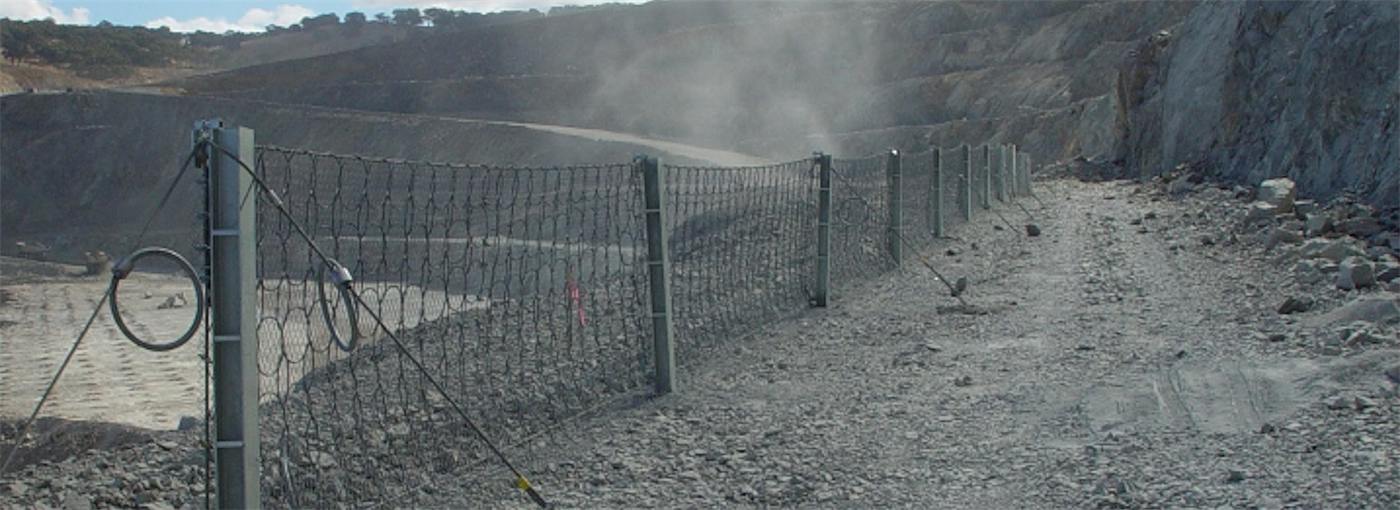
Flexible, energy-absorbing fences that intercept and arrest falling rock — engineered across the full spectrum from light 100 kJ fences to 12,500 kJ high-energy barriers, with post, cable and ring-net assemblies sized to the trajectory.
↳ 100–12,500 kJ · post & ring-net systems
SOL-02Featured
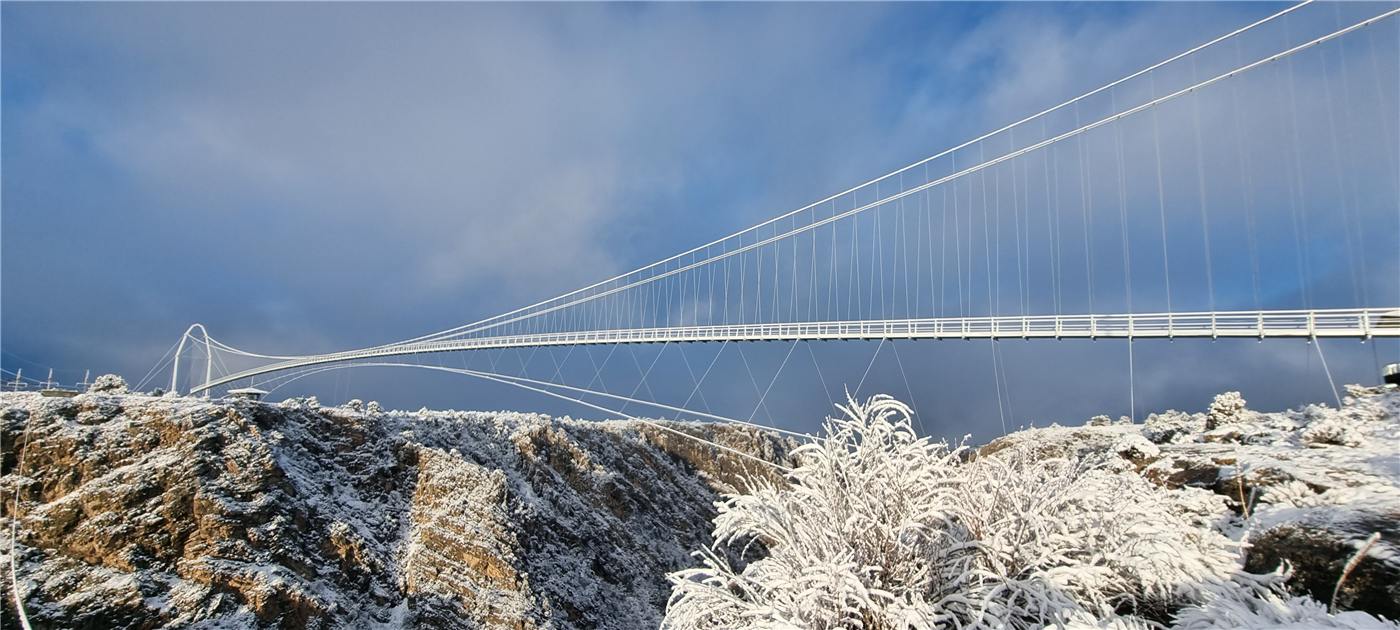
Trail & Suspension Footbridges
Engineered pedestrian and trail bridges that reconnect communities across wadis, ravines and mountain crossings — long single spans, rapid installation and full structural certification for safe public use.
↳ single spans to 250 m+ · certified
SOL-03
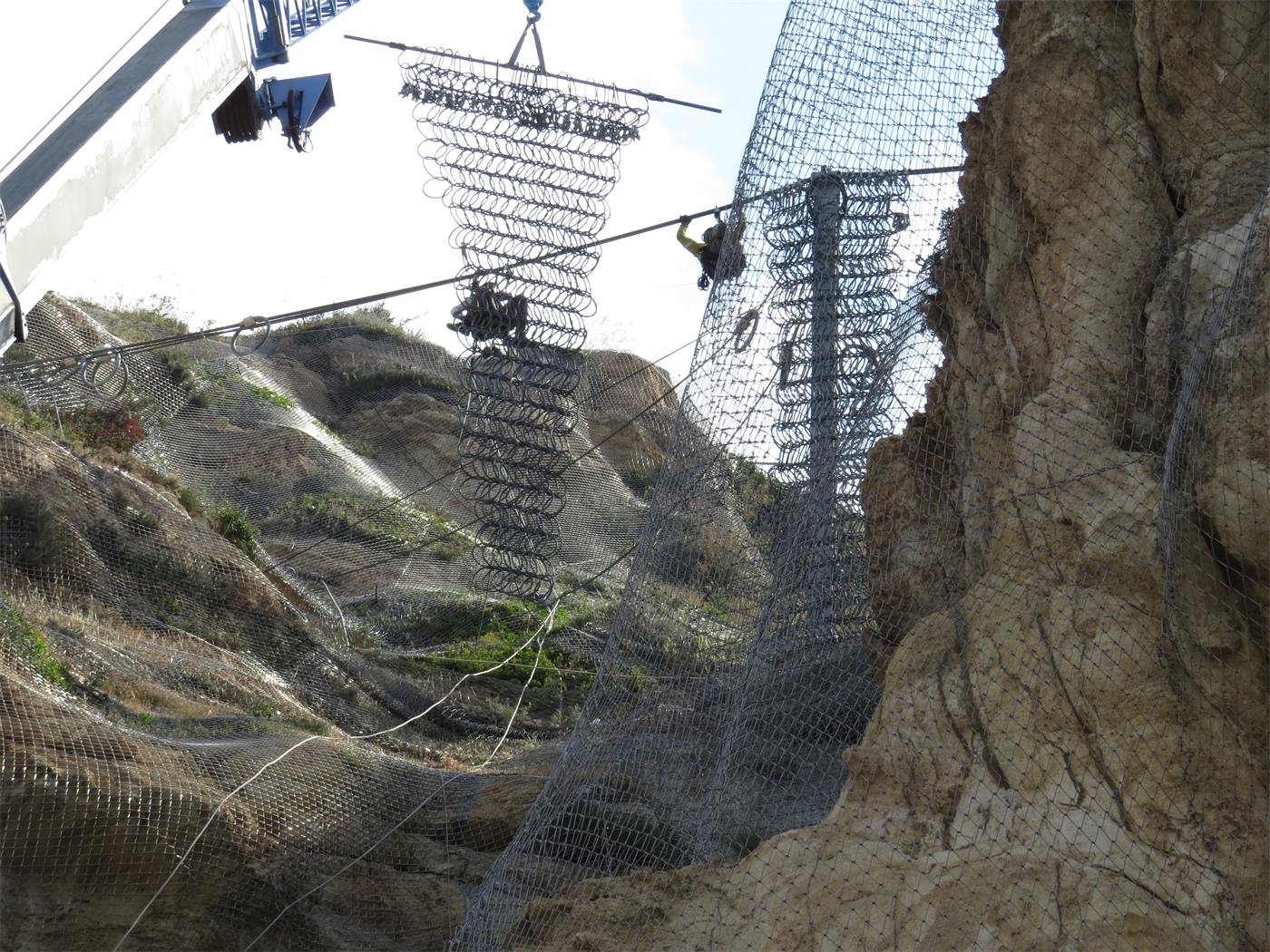
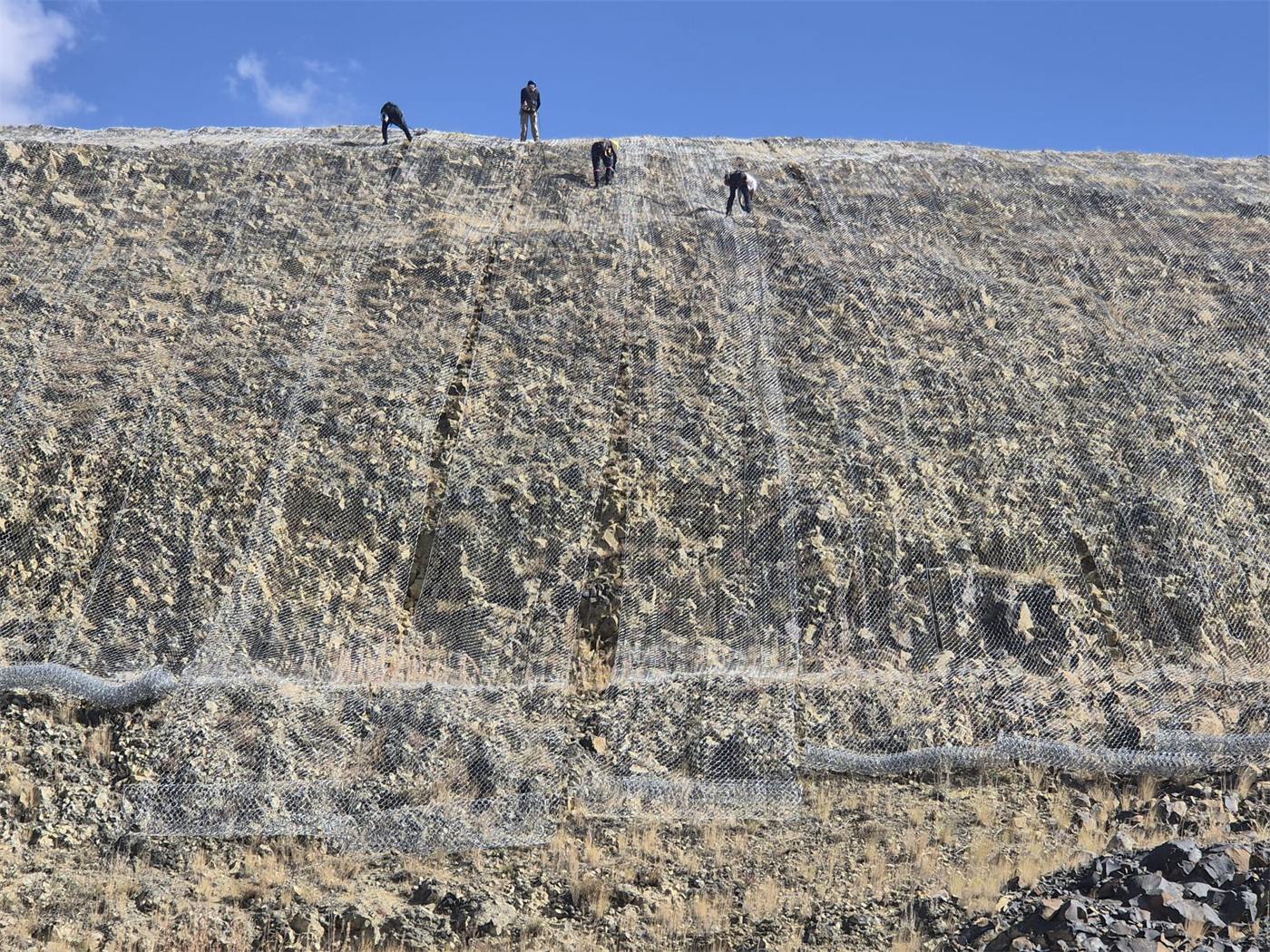
Slope & Embankment Stabilization
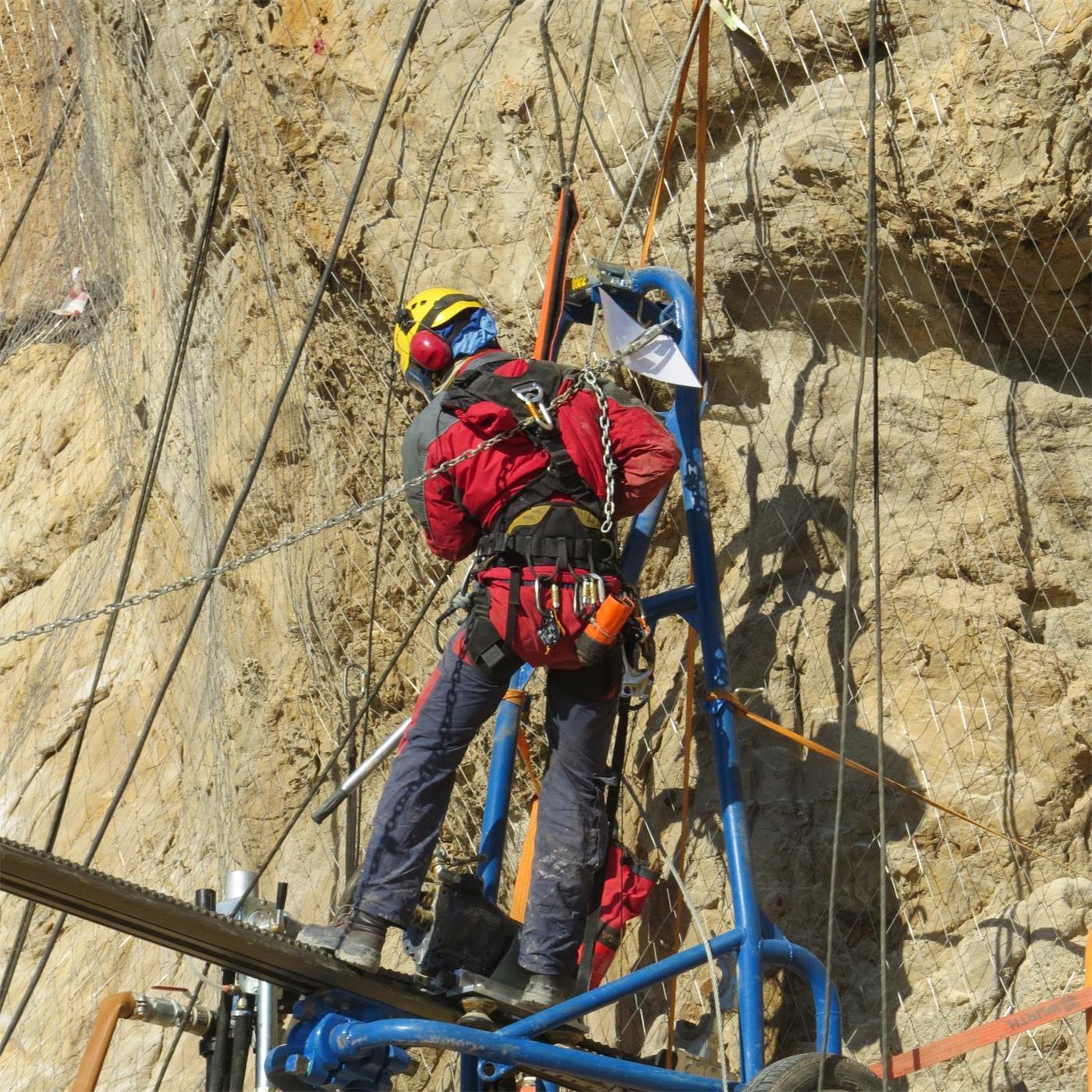
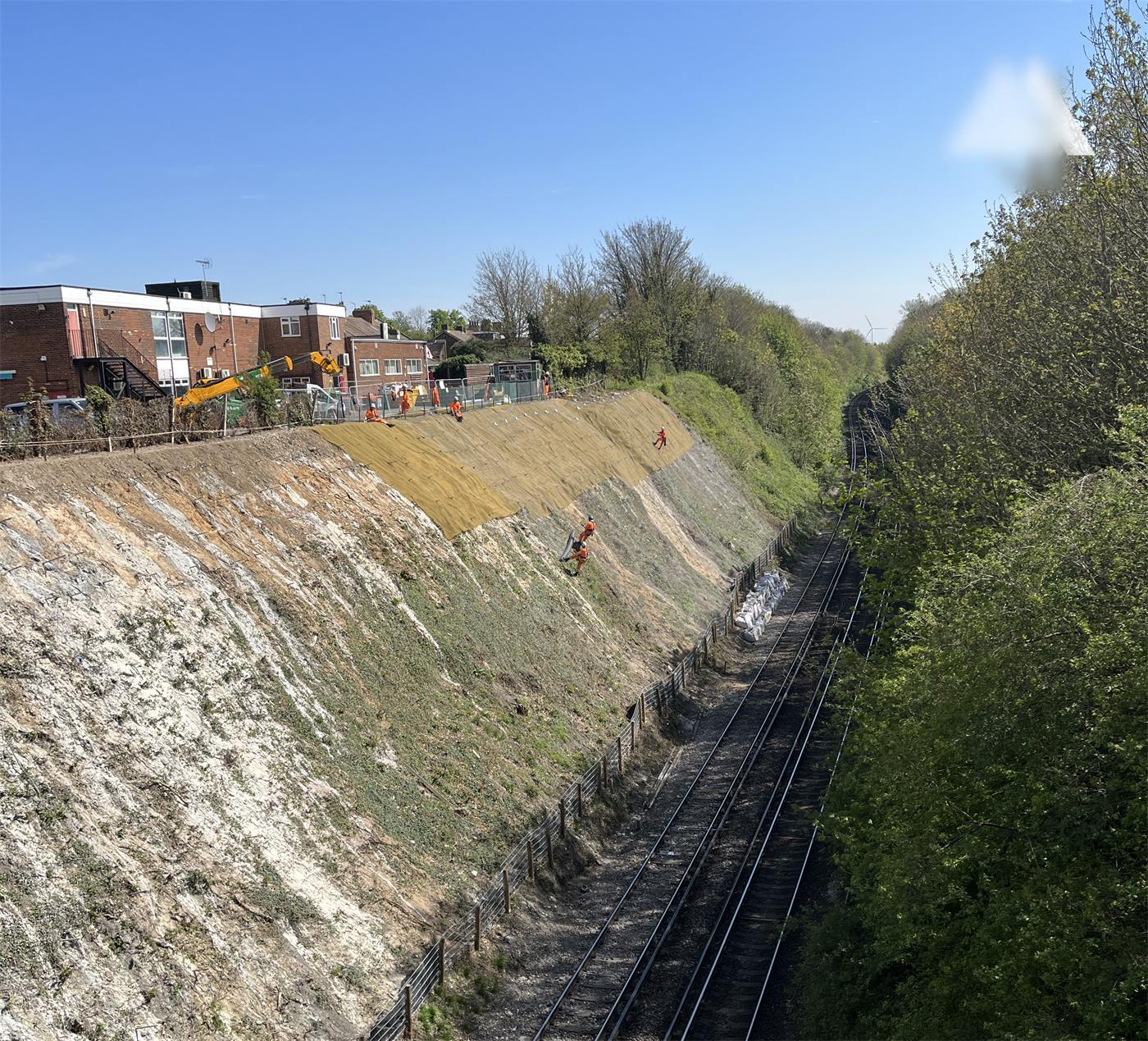
Drape mesh, high-tensile steel grids and anchored facings — secured with anchors, dowels, rock bolts and tensioned cable strapping — that pin loose surfaces and hold weathered rock in place.
↳ mesh · grid · nailing
SOL-04
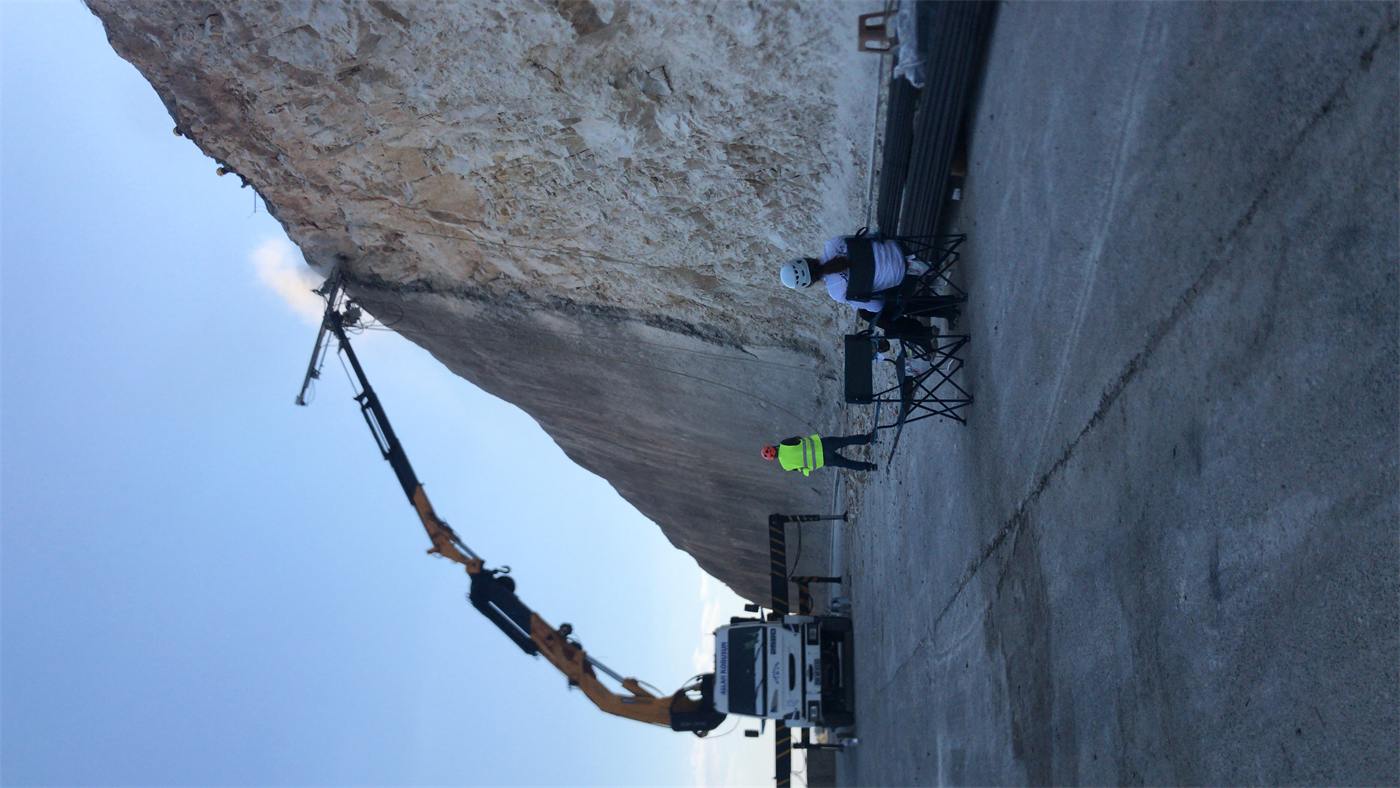
Shotcrete & Surface Sealing
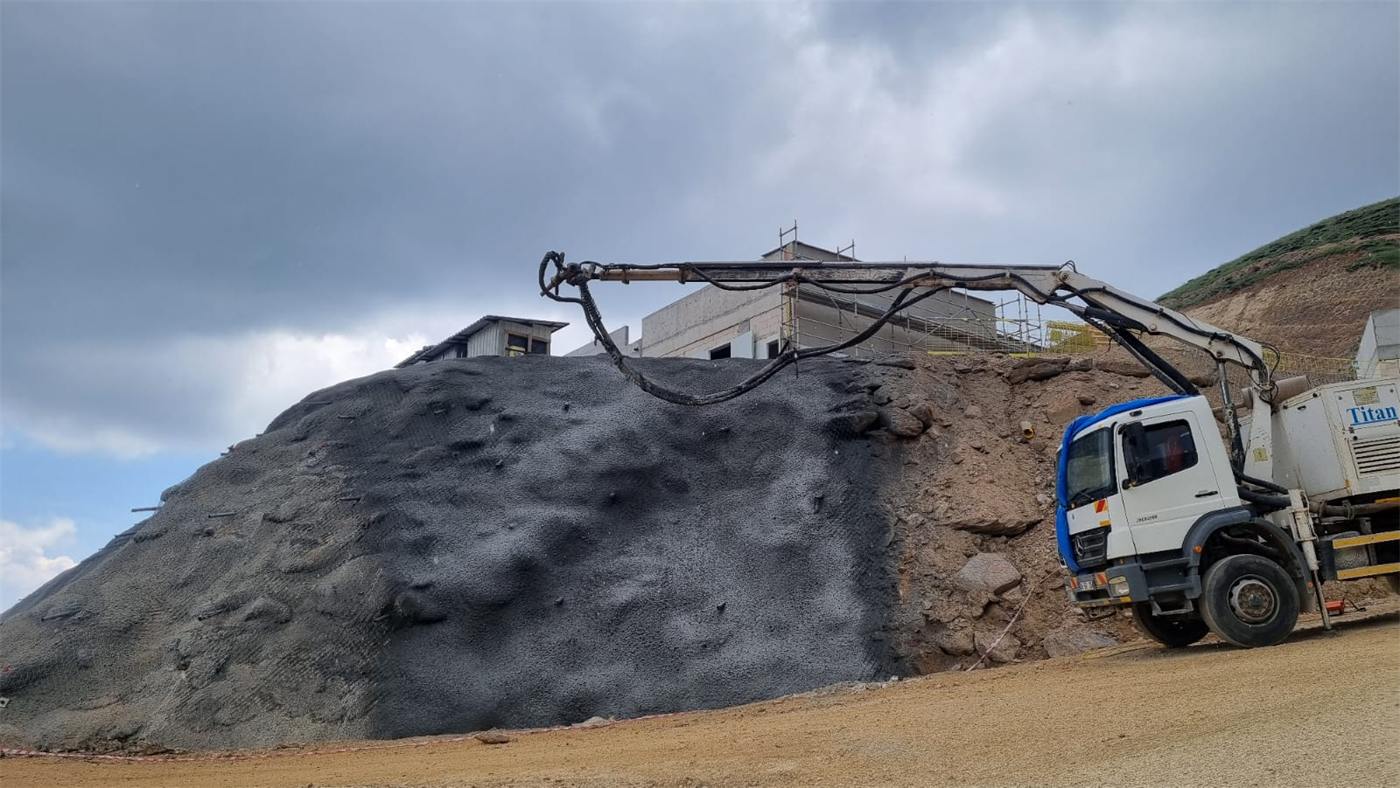
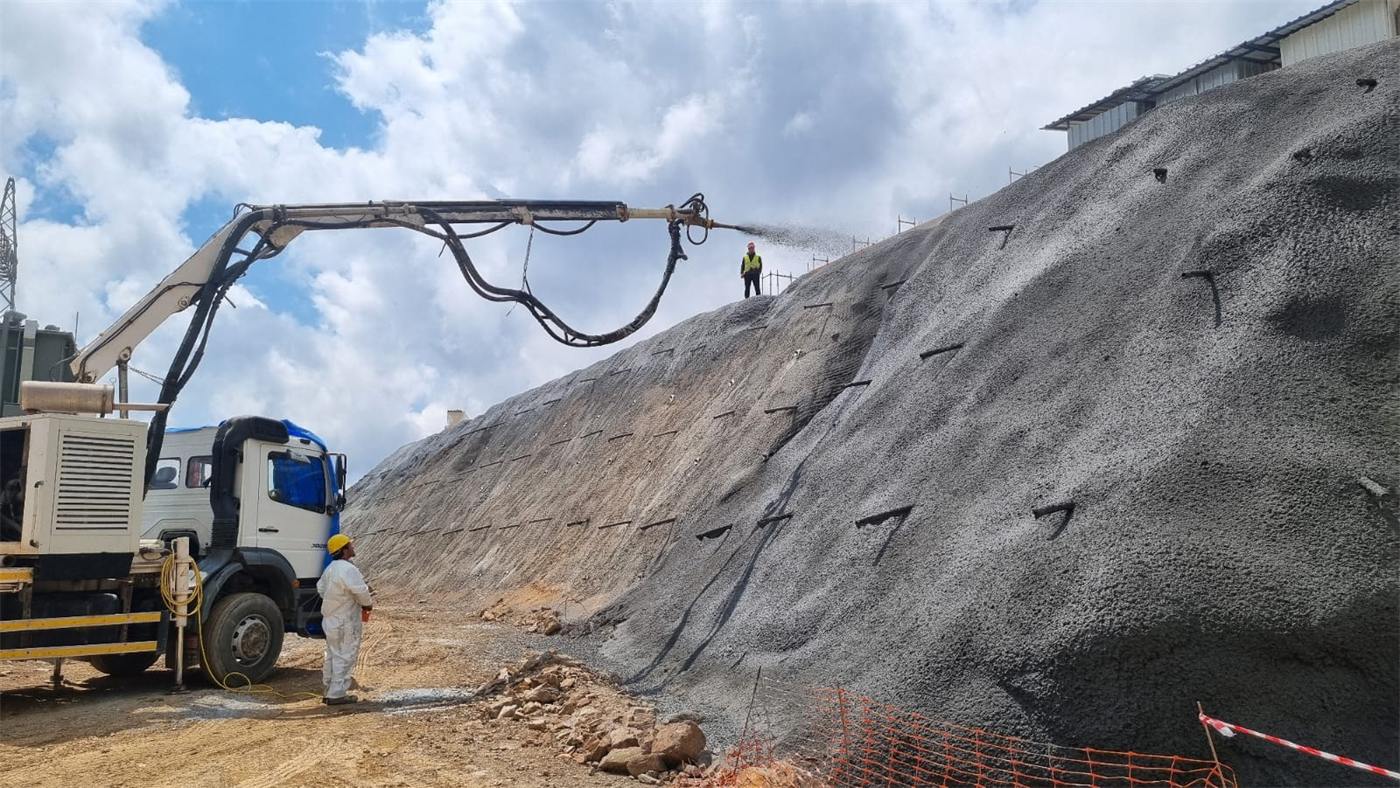
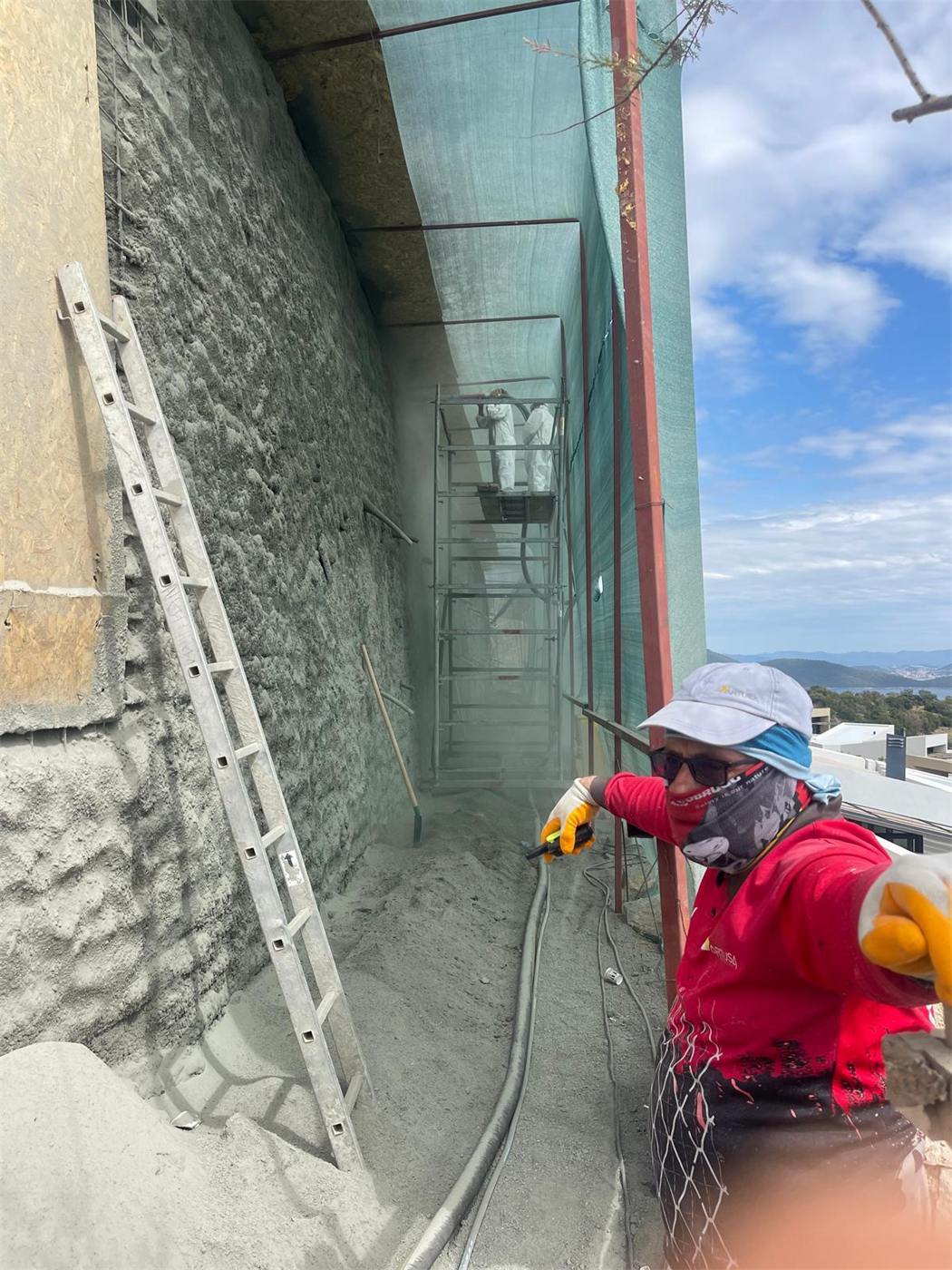
Reinforced sprayed-concrete facings — dry-mix or wet-mix, with optional steel-mesh reinforcement and drainage — that seal fractured rock against erosion, weathering and surface failure.
↳ reinforced · drained
SOL-05
Debris-Flow & Landslide Control
Heavy-duty flexible barriers and check structures that retain debris flows, mudslides and channelized torrents in steep catchments.
↳ flexible & rigid barriers
SOL-06
Mining & Quarry Protection
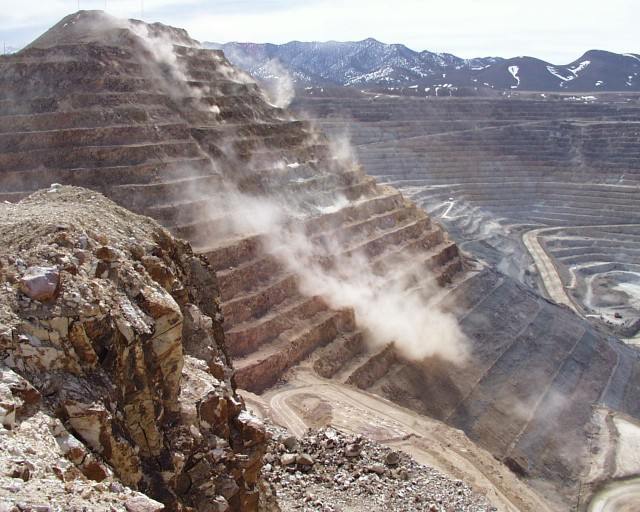
Bench, haul-road and high-wall protection that keeps operations and crews safe through every stage of extraction.
↳ bench & high-wall
SOL-07
Hydroseeding & Revegetation
Erosion-control matting and hydroseeding that re-green cut slopes — restoring the surface and binding it for the long term.
↳ green stabilization
SOL-08
Early-Warning & Monitoring
Smart sensor networks that watch slopes in real time — detecting movement and triggering alerts before failure.
↳ live · sensor-driven
SOL-09
Rock & Slope Scaling
Removal of loose rock and debris by certified rope-access technicians — clearing the hazard before protection systems go in.
↳ rope-access · certified technicians
SOL-10
Hydraulic Rock Splitting
Controlled, vibration-free breaking of rock and reinforced concrete — hydraulic wedges in drilled holes split the mass from within at 400+ tonnes of force, with no blasting, shock waves or flying debris.
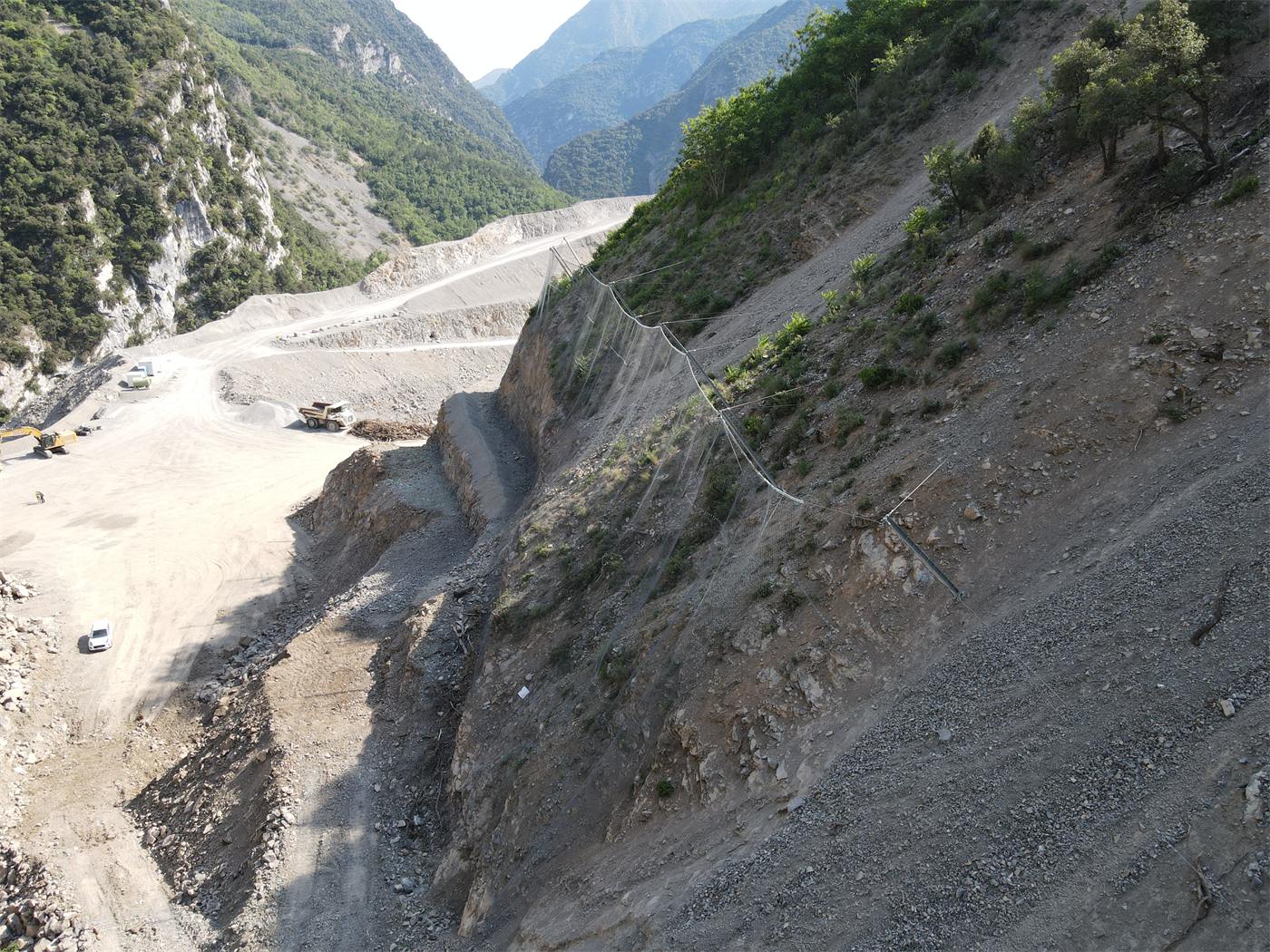
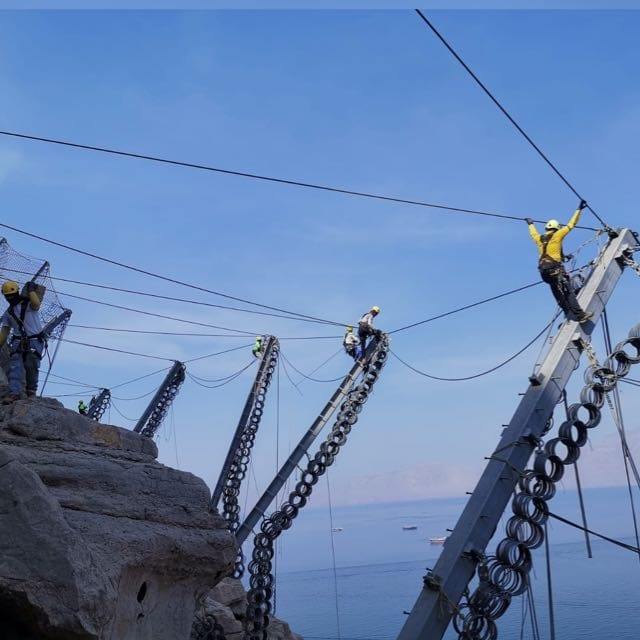
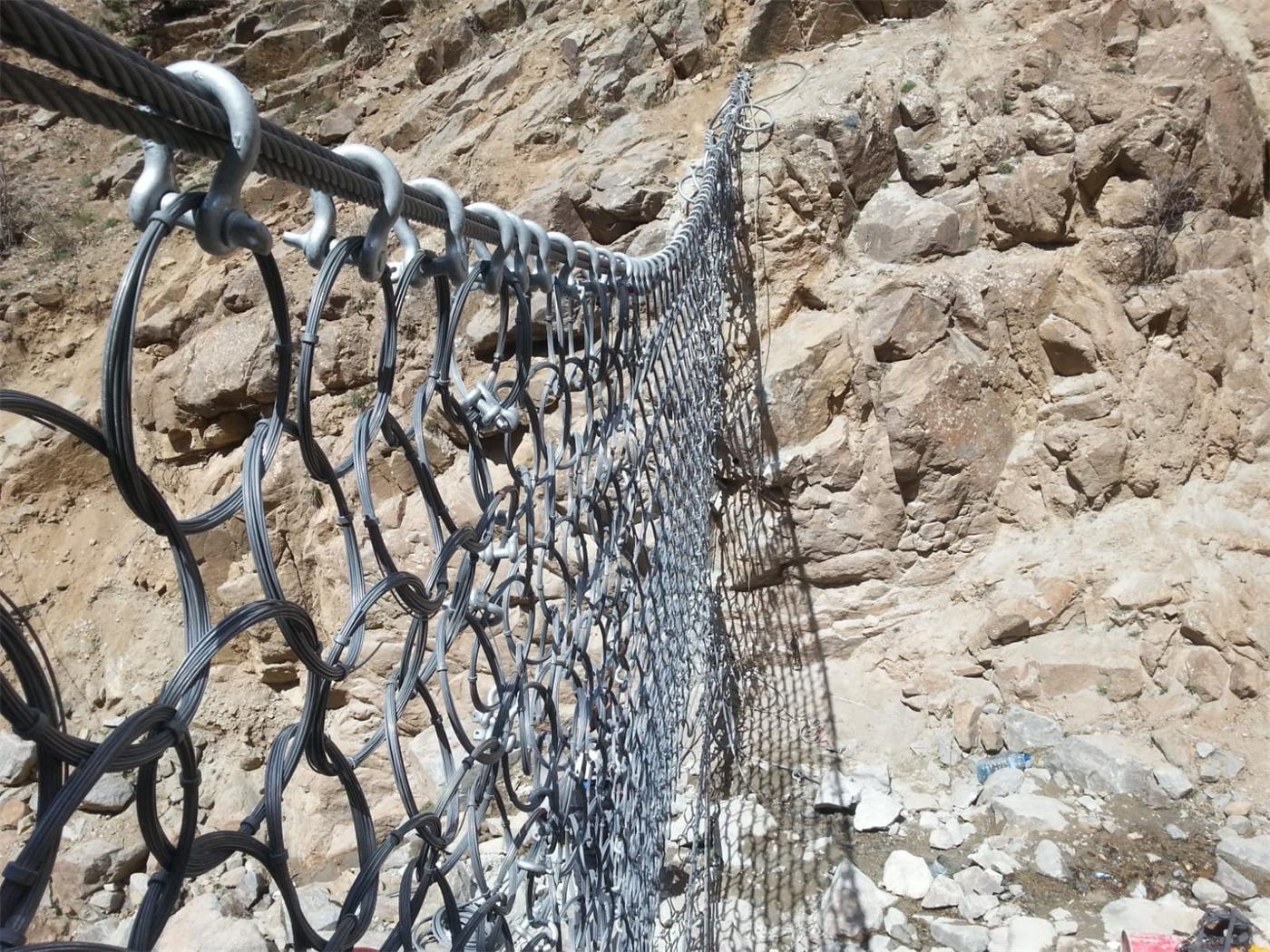
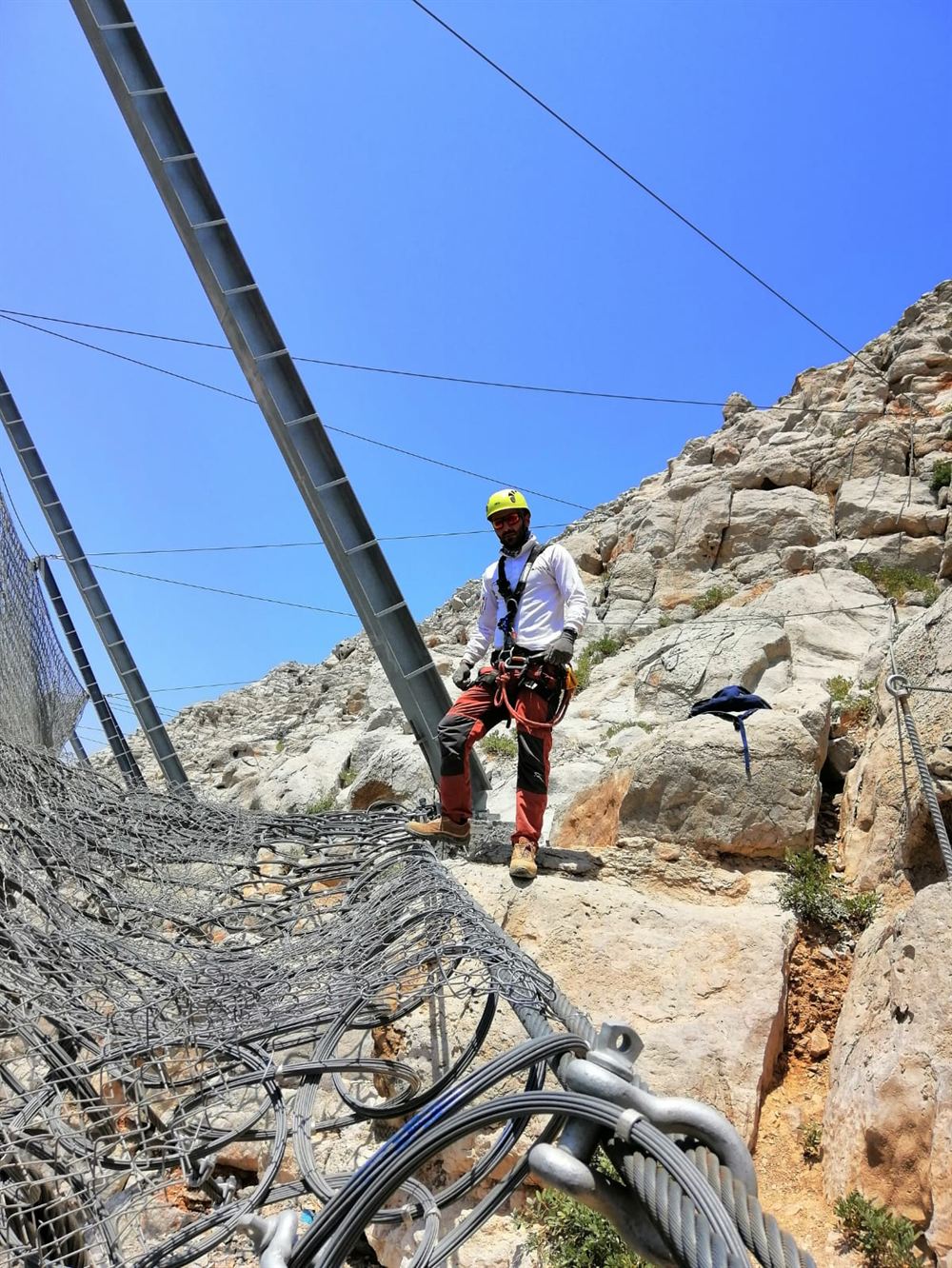
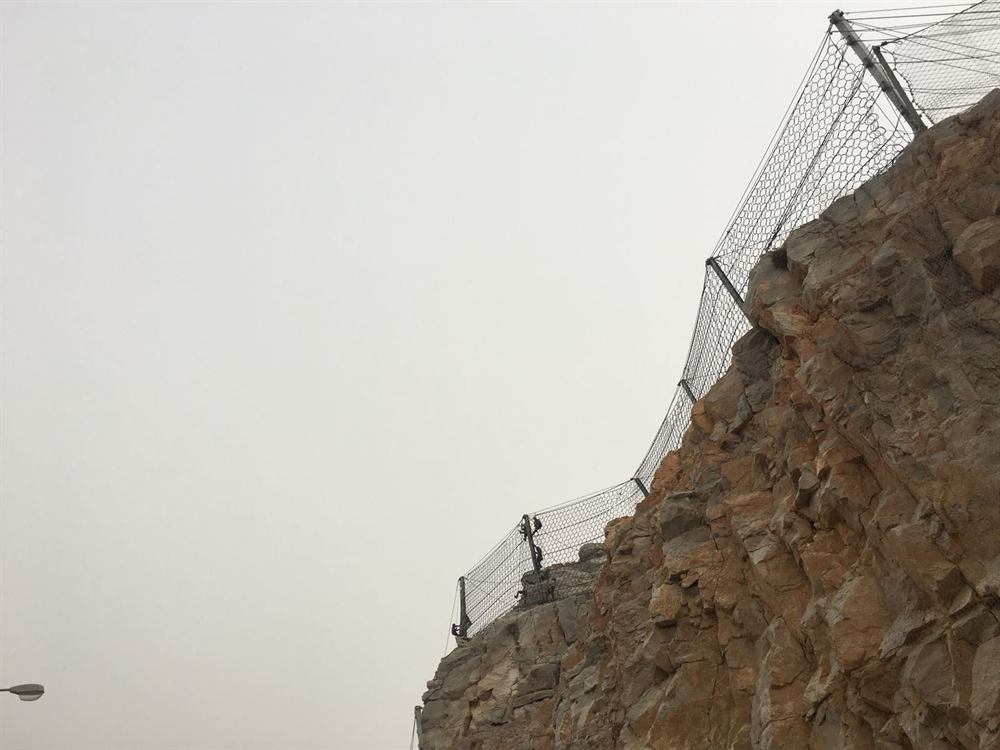
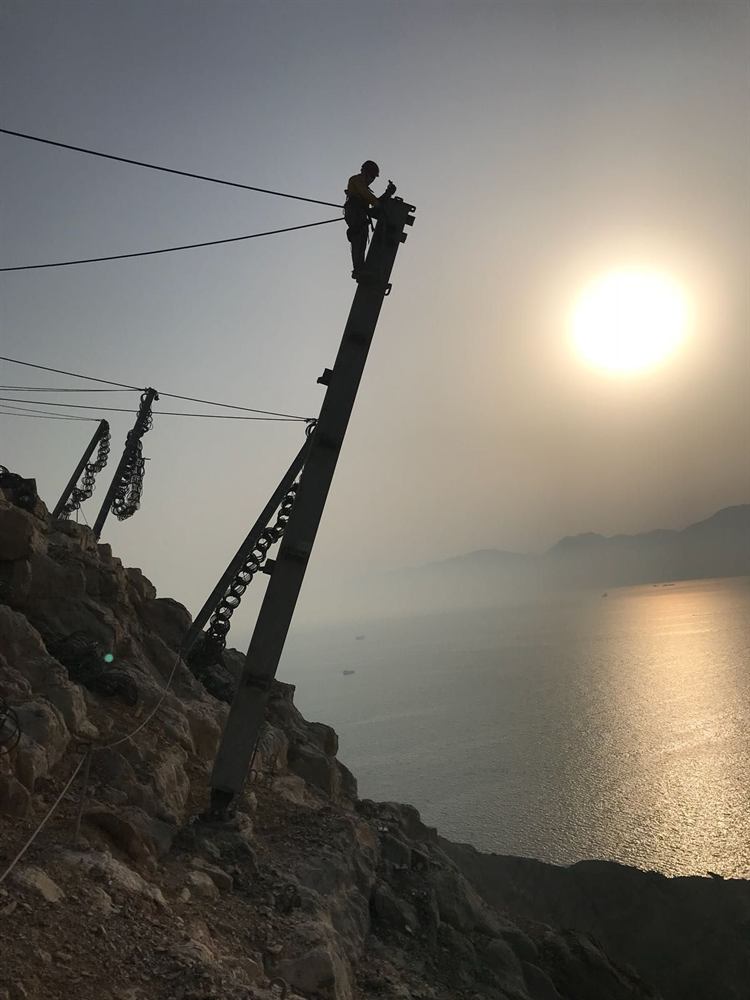
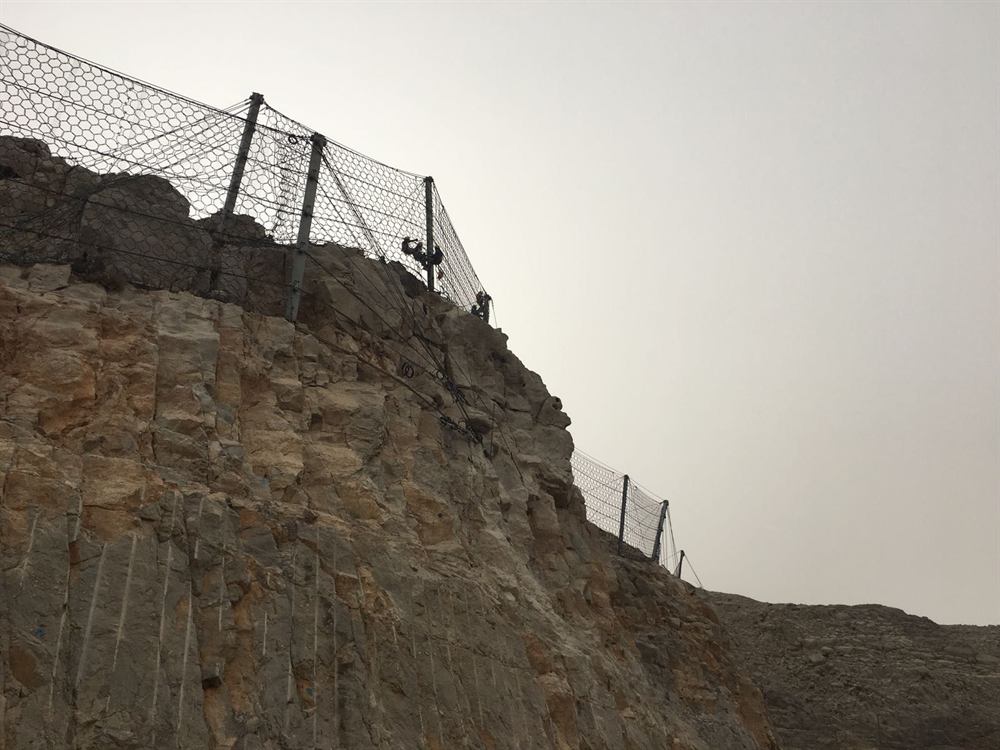
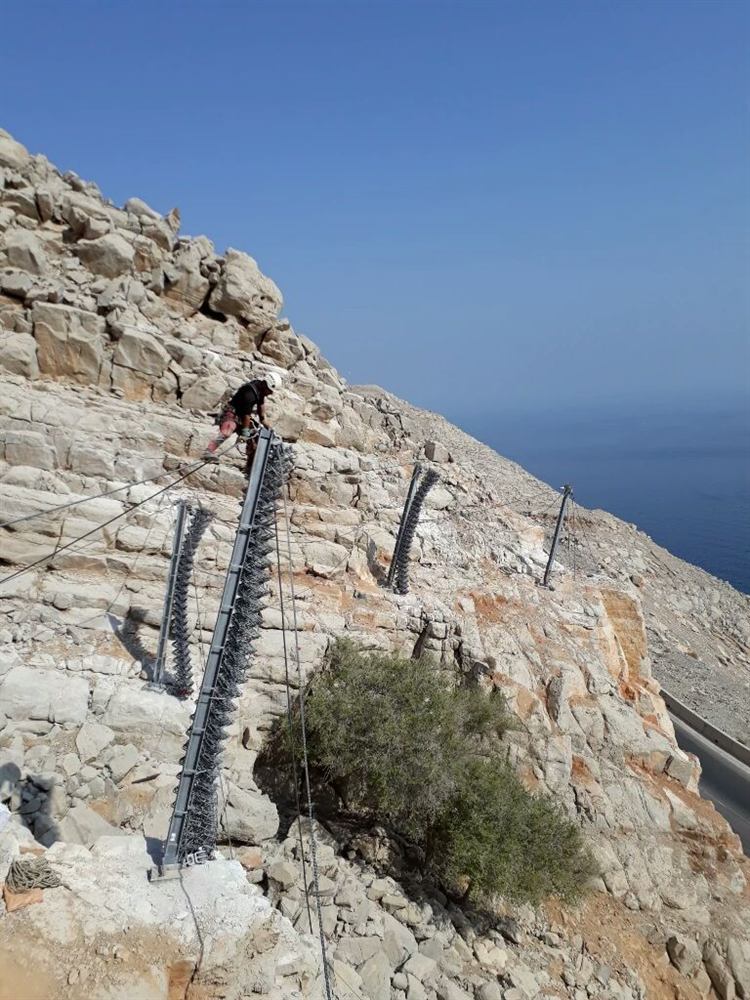
Flexible barriers intercept falling rock in flight and dissipate its energy through ring nets, steel posts and energy-absorbing brake elements. Line position, height and capacity are fixed by trajectory simulation on the real slope profile.
We engineer across the full spectrum — from light 100 kJ roadside fences to 12,500 kJ high-energy systems — with corrosion protection matched to Oman’s coastal and desert exposure, and permanent access for inspection and maintenance.
Scope of works
Trajectory & energy simulation per slope section
Drilled, grouted foundations and anchors
Post, ring-net and brake-element assembly
Tensioning and commissioning to system specification
Inspection & maintenance regimes after handover
100–12,500 kJRing-net & post systemsCoastal-grade corrosion class
FIG.01 — Barrier lines above wadi corridorFIG.02 — Post erection, coastal escarpmentFIG.03 — Ring-net & post detail
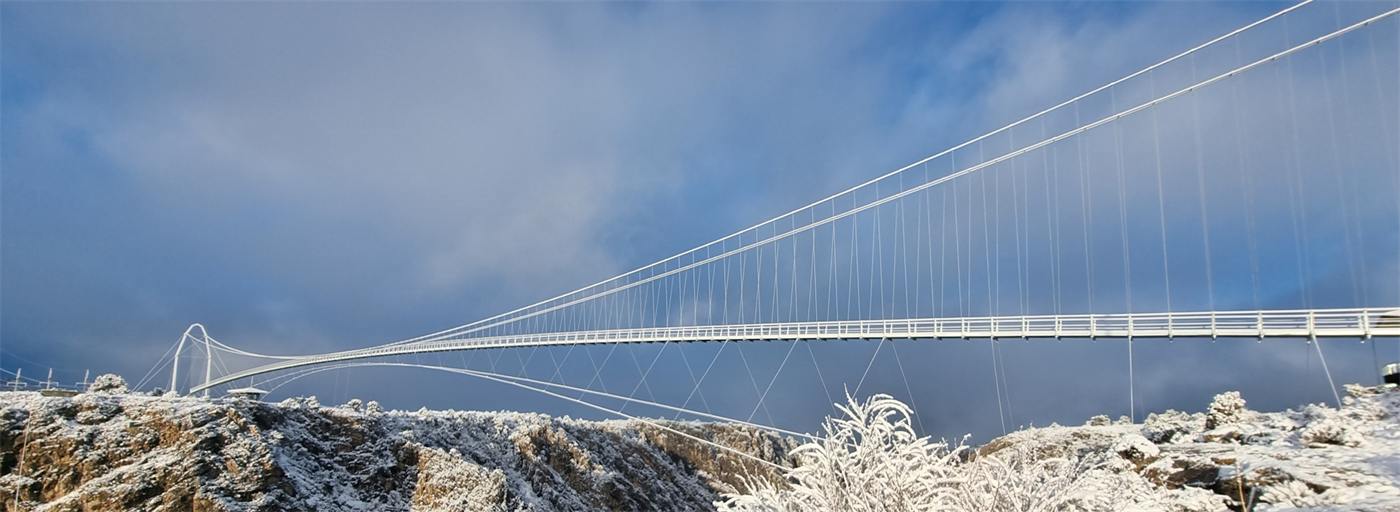
Engineered pedestrian bridges reconnect communities across wadis, ravines and mountain crossings. Suspended cable systems allow long single spans beyond 250 m with no intermediate piers — the right answer for rugged terrain and remote sites.
We carry the full path: route and span study, cable and anchor-block design, foundations on both banks, deck, handrail and wind-guy installation — finishing with load testing and full structural certification for safe public use.
Scope of works
Route, span & access study
Cable system & anchorage design
Foundation works at both abutments
Deck, handrail & wind-guy installation
Load testing & documented handover
Single spans to 250 m+Wind & seismic checkedRemote-site logistics
FIG.01 — Long single-span suspension bridgeFIG.02 — Gorge crossing, winter service
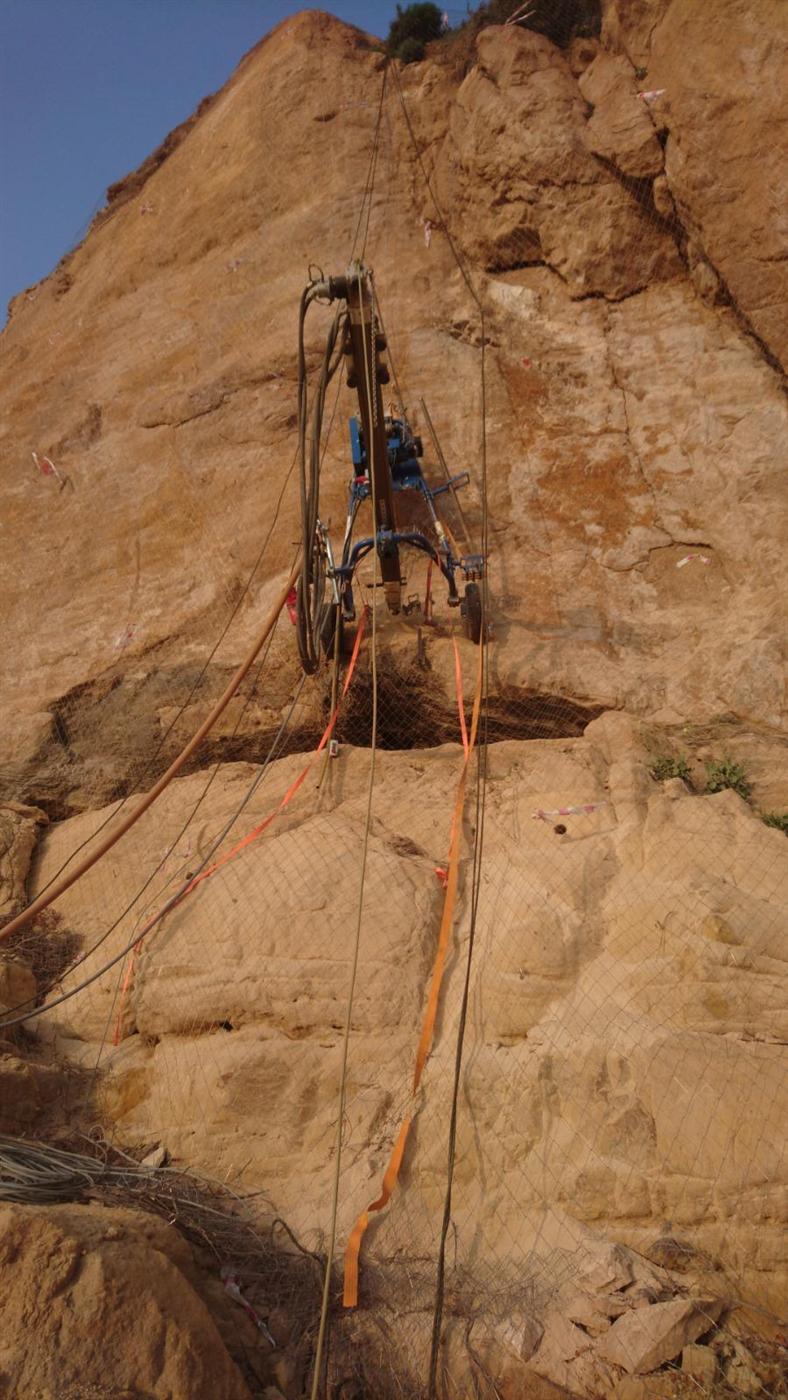
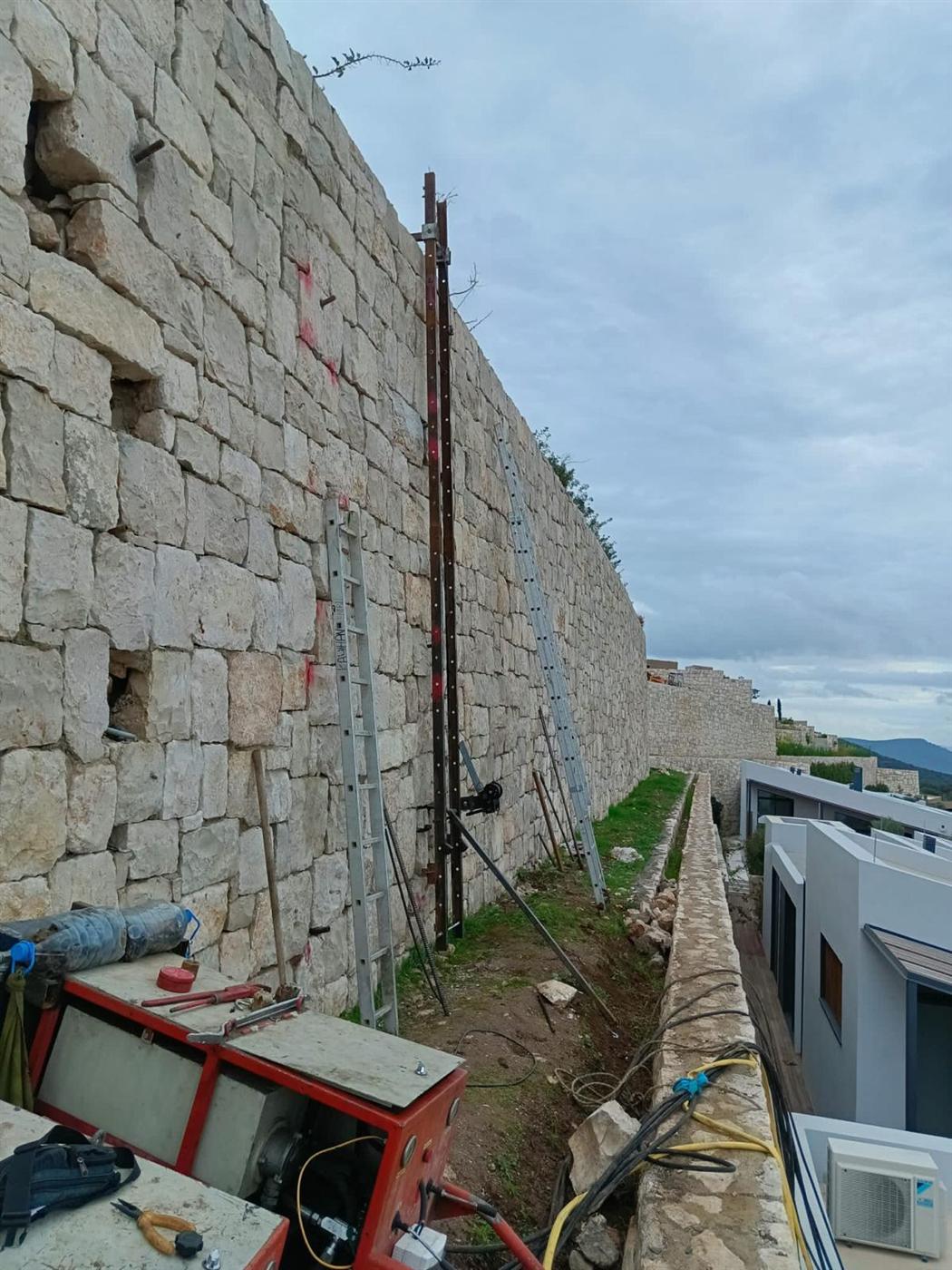
Weathered faces and loose blocks are pinned in place with drape mesh and high-tensile steel grids tied to grouted anchors and rock bolts. Bearing plates transfer the mesh forces into each anchor, so the whole face acts as one tensioned system.
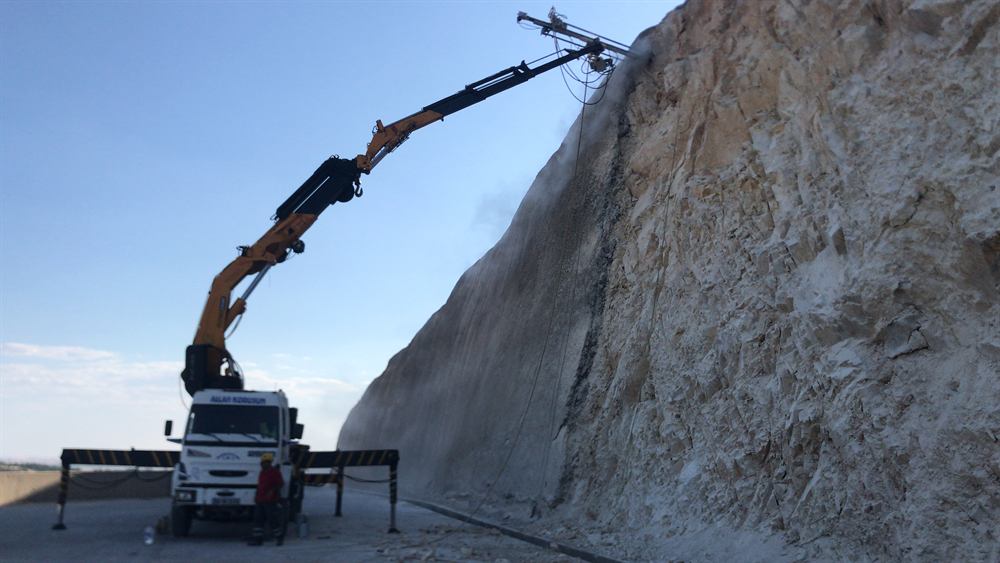
Our crews work by rope access and crane-mounted drill platforms where conventional plant cannot reach — drilling, grouting and tensioning — with documented pull-out tests on every anchor pattern before handover.
Scope of works
Geotechnical mapping of the rock structure
Anchor & rock-bolt pattern design
Rope-access & crane-platform drilling and grouting
High-tensile mesh & bearing-plate installation
Pull-out testing & QA documentation
Rock bolts & anchorsHigh-tensile meshRope-access drilling
Sprayed-concrete facings seal fractured rock against erosion, weathering and surface failure. We apply both wet-mix and dry-mix — robotic arms over large faces, hand nozzles where detail demands it.
Faces are reinforced with steel mesh or fibres as designed, and drainage weeps are built in so water pressure never accumulates behind the shell. Thickness and strength are verified with documented core samples.
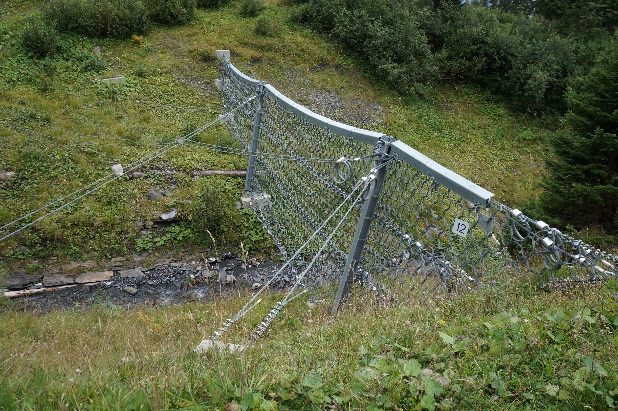
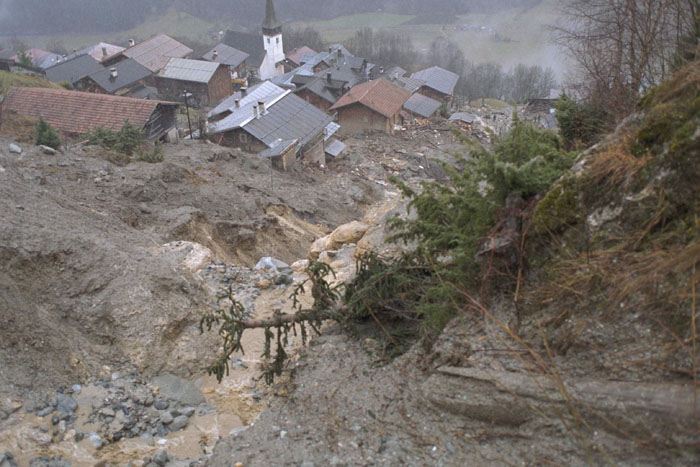
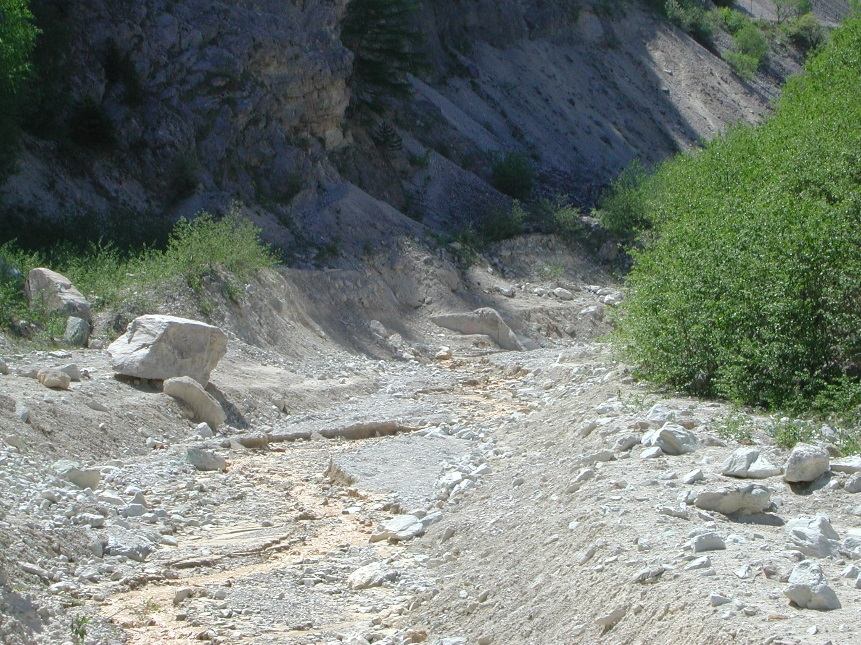
In steep catchments, flash floods turn into debris flows carrying rock and mud at destructive speed. Heavy flexible barriers intercept the surge across the channel, retaining the solids while water keeps passing through. Oman knows this hazard well — from khareef-season slopes in Dhofar to cyclone-driven flash floods on the Batinah coast.
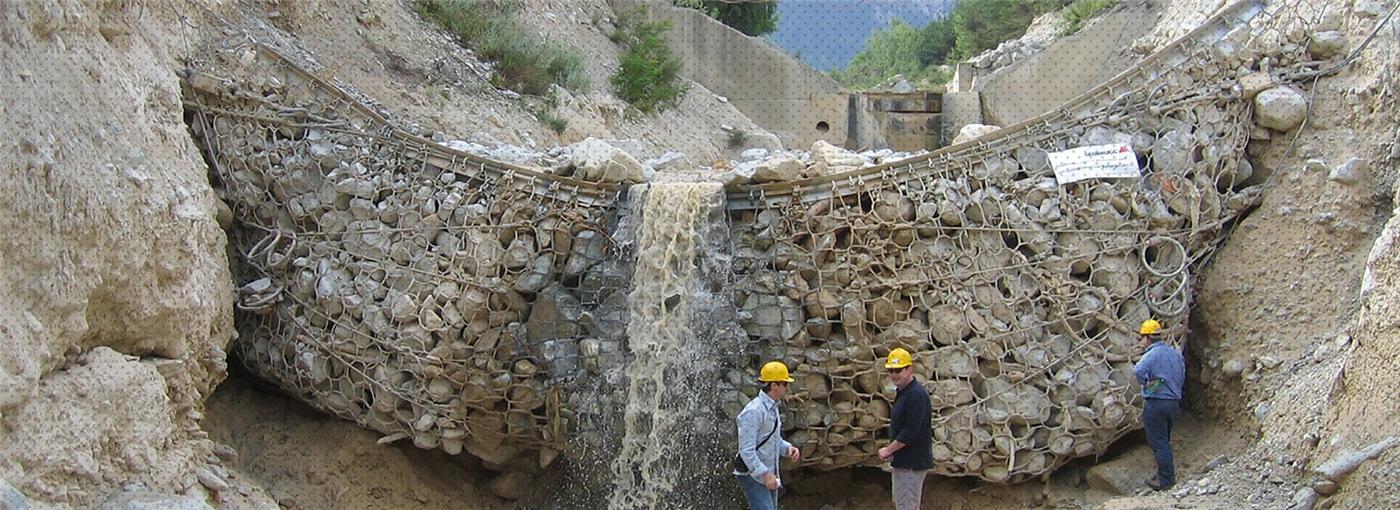
The design surge is estimated from the catchment itself; barriers are anchored into both flanks and the channel bed, complemented where needed by check structures and gabion works. After every event we return the barrier to service — cleanout and inspection.
Scope of works
Catchment study & design-surge estimate
Barrier line & capacity selection
Anchoring into channel flanks and bed
Check structures & gabion works
Post-event cleanout & re-service
Channelized torrentsRing-net debris barriersGabion check works
FIG.01 — Flexible barrier spanning the torrent channelFIG.02 — Debris flow reaching a settlementFIG.03 — Debris-choked torrent channelFIG.04 — Gabion check dam under flow
In open pits and quarries every stopped hour costs production. We protect benches, haul roads and high walls with catch fences, above-road attenuators and pinned mesh — keeping operations and crews safe through every stage of extraction.
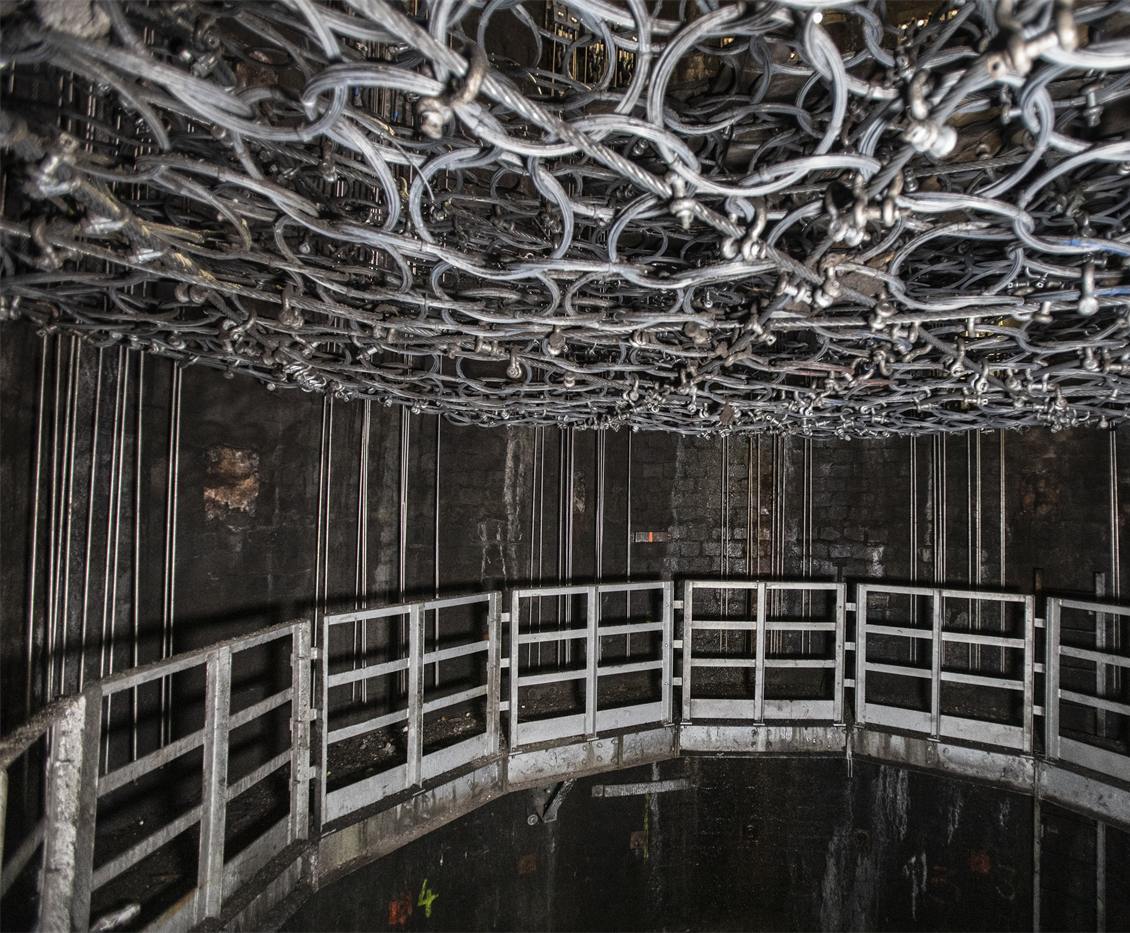
The same expertise runs underground: shaft and portal linings in ring net, rock support around critical infrastructure. Installation is scheduled inside planned shutdown windows so production is never interrupted.
Scope of works
High-wall & bench hazard survey
Bench catch systems
Haul-road attenuators
Underground shaft & portal lining
Installation inside shutdown windows
Open pit & undergroundHaul-road attenuatorsZero-downtime scheduling
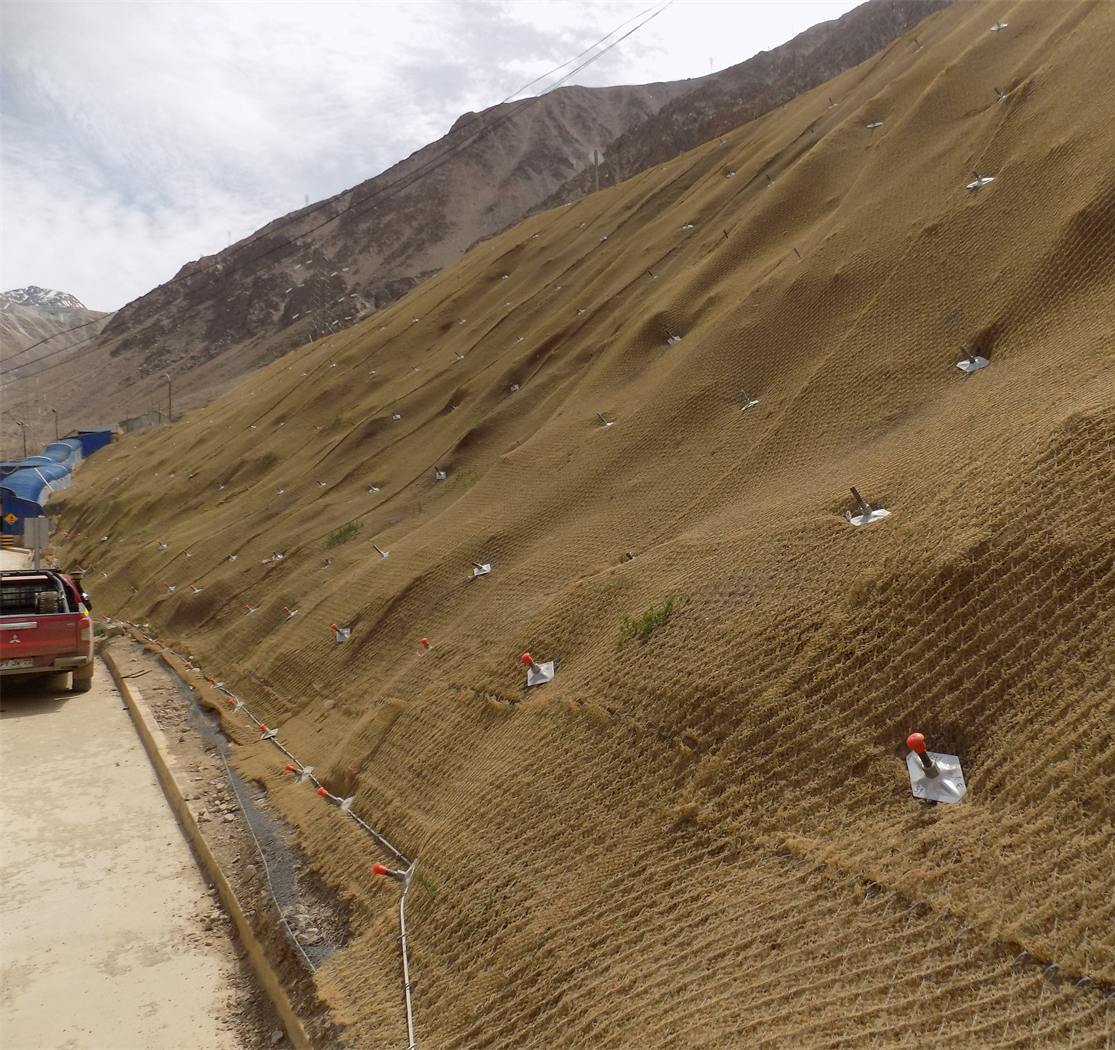
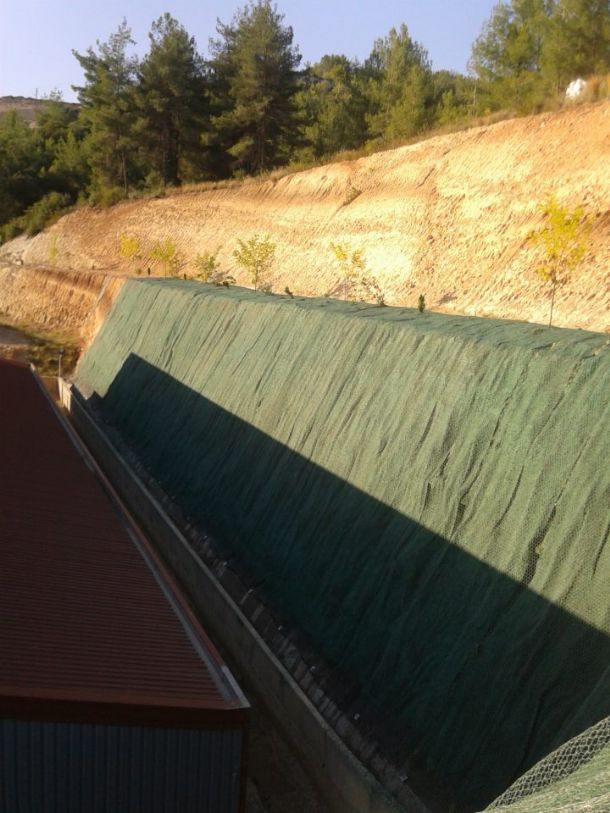
Vegetation is the longest-lived protection system — it binds the slope surface with its roots and stops erosion at the source. We anchor erosion-control mats over the face, then spray seed, mulch and binder in a single hydroseeded layer.
Seed mixes are matched to arid climate and site soil, and where needed the system is combined with steel mesh in a green-steel hybrid. Establishment is monitored through the growing seasons until cover holds on its own.
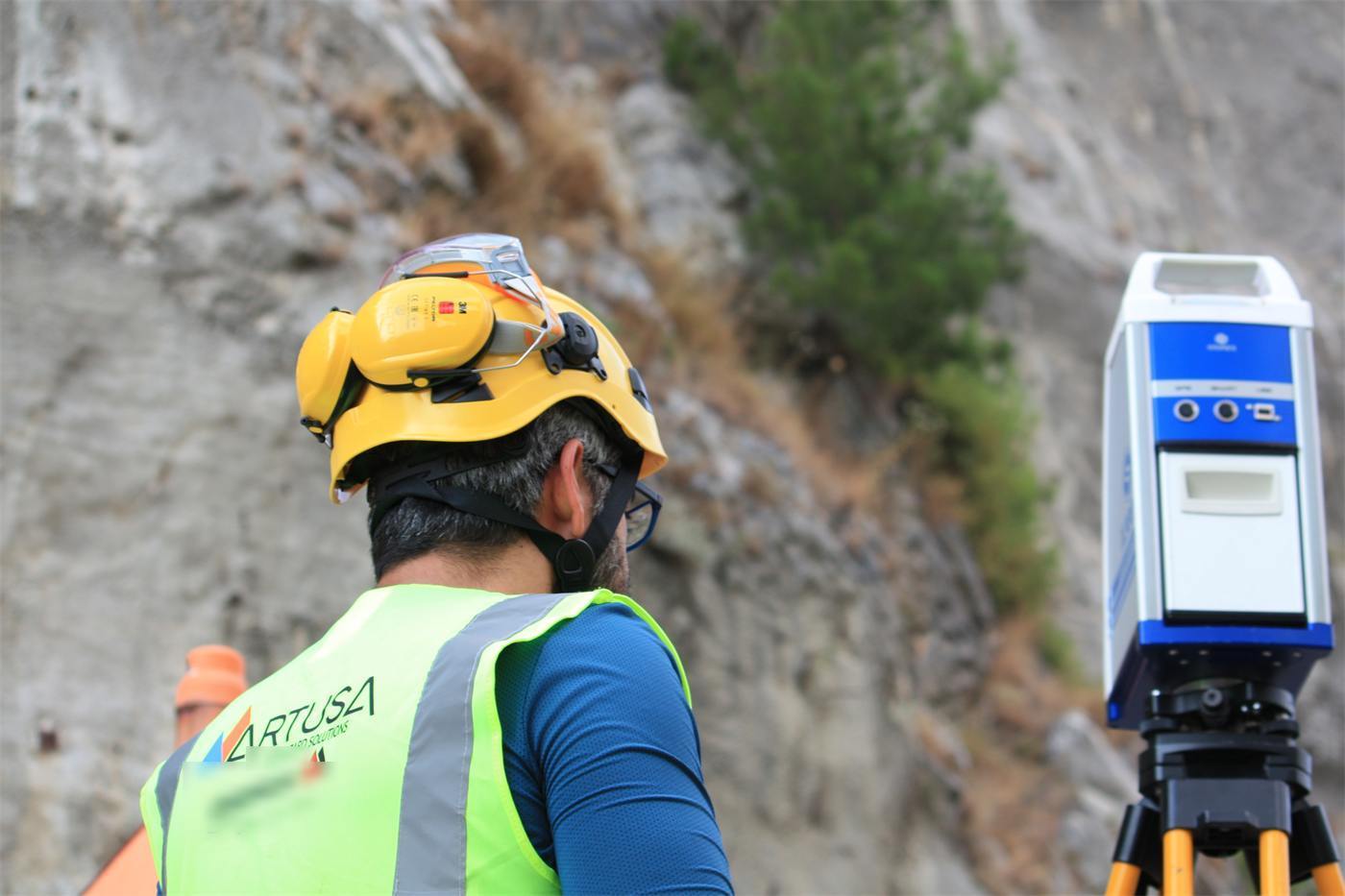
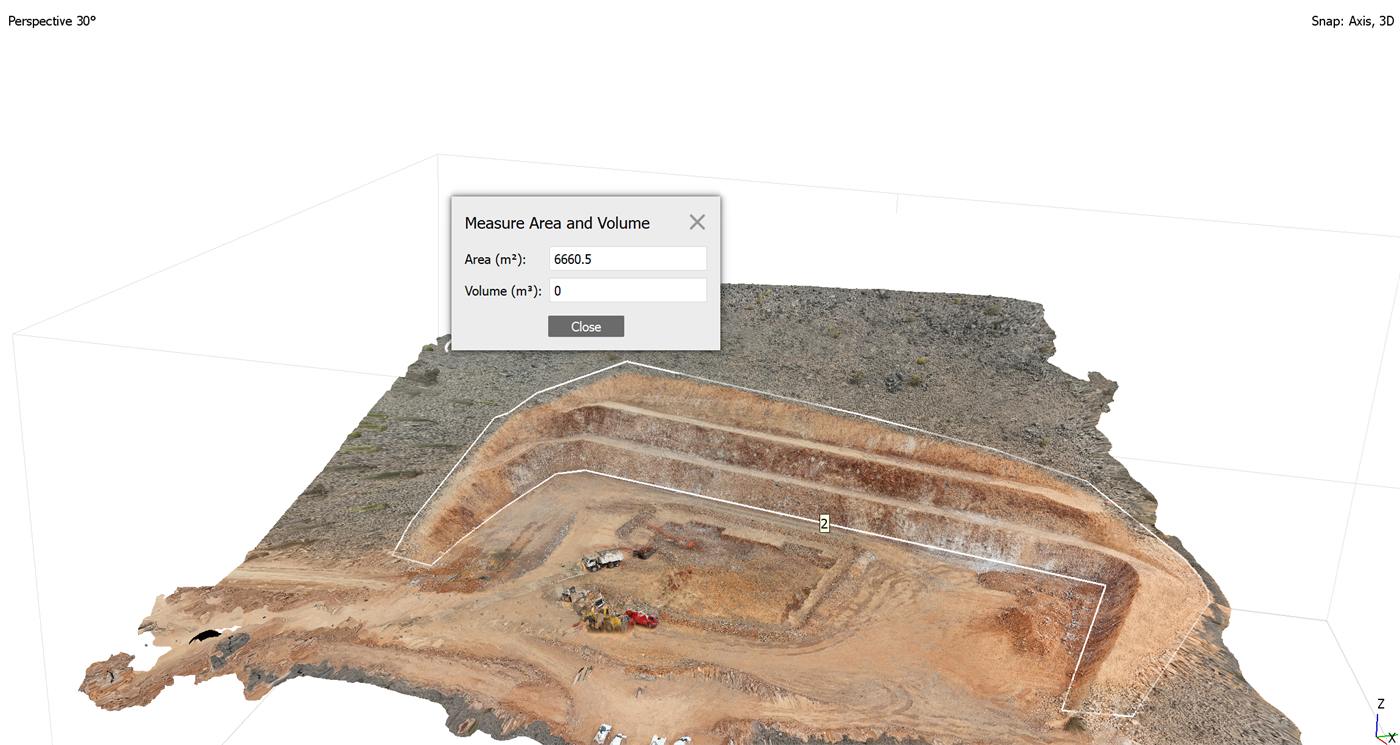
Monitoring starts with a precise baseline: terrestrial laser scanning and drone photogrammetry produce a 3D model of the slope on which volumes and displacements are measured to centimetre accuracy.
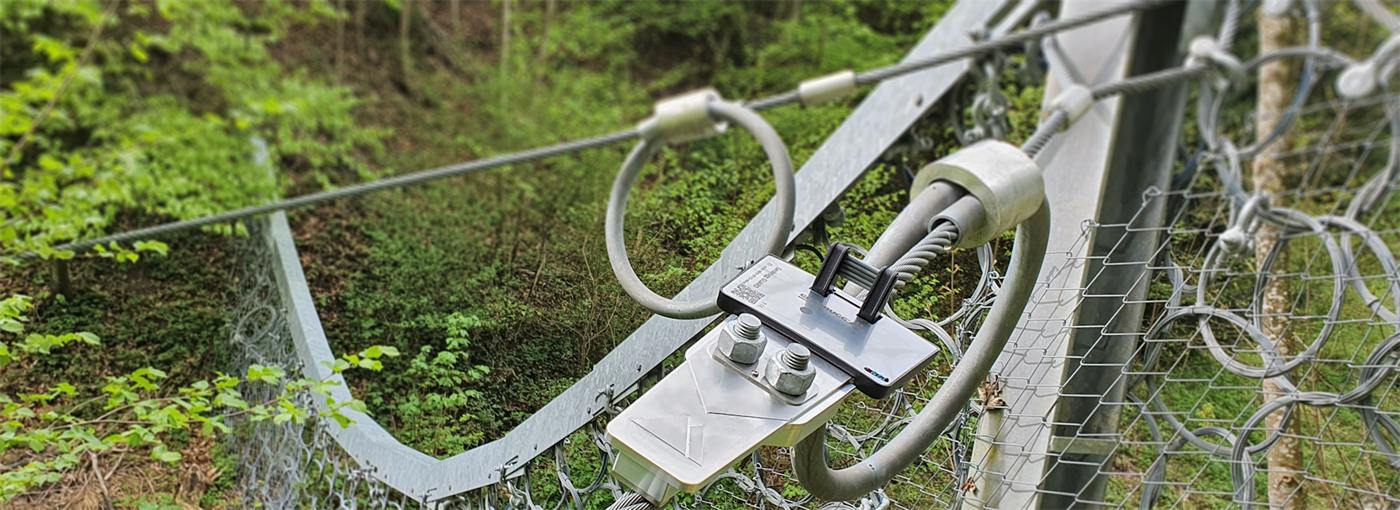
Live sensors go onto the installed systems — cable load, acceleration, corrosion — and alert thresholds are engineered to trigger before failure, with periodic re-scan reports that expose any movement between surveys.
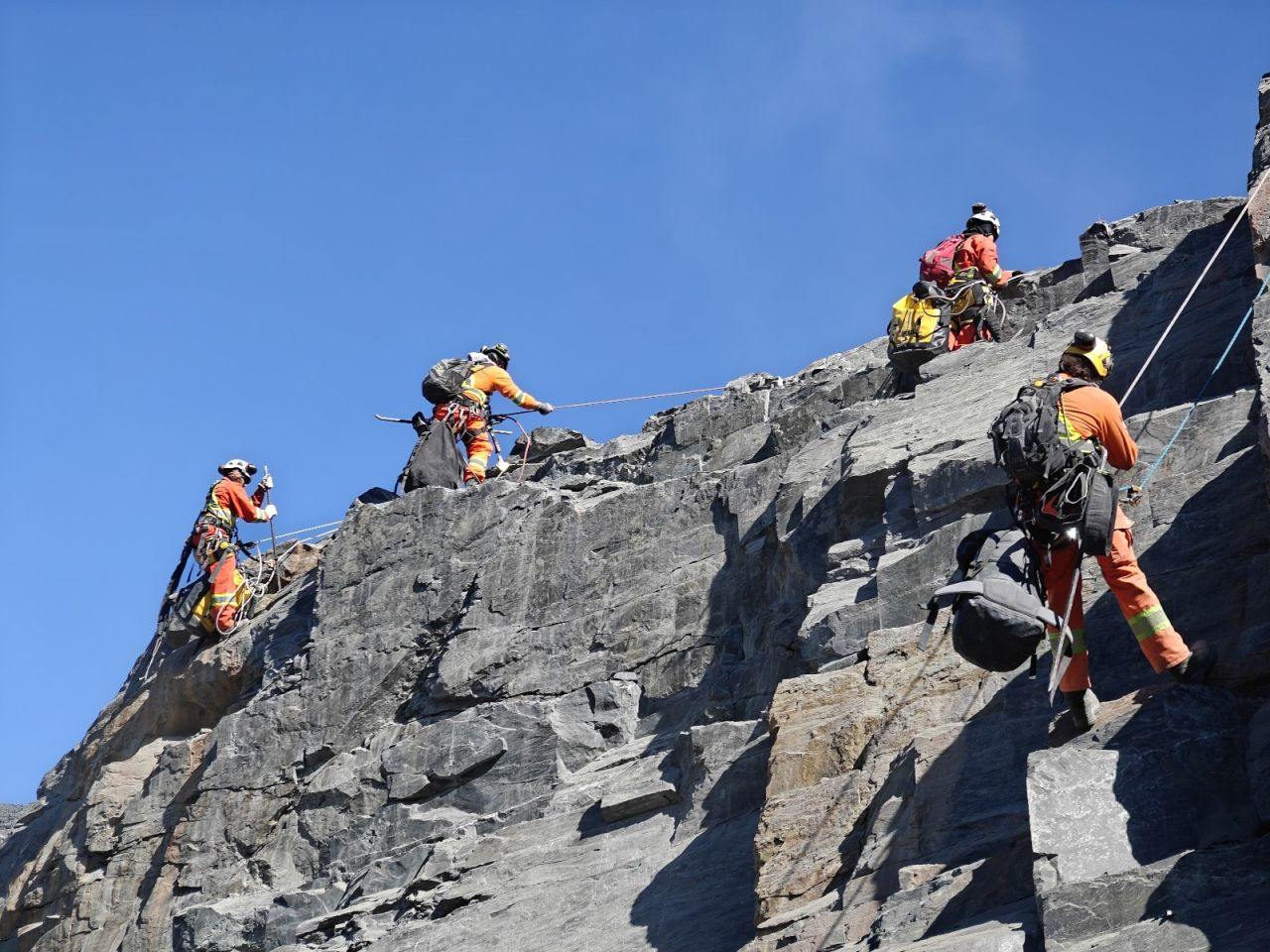
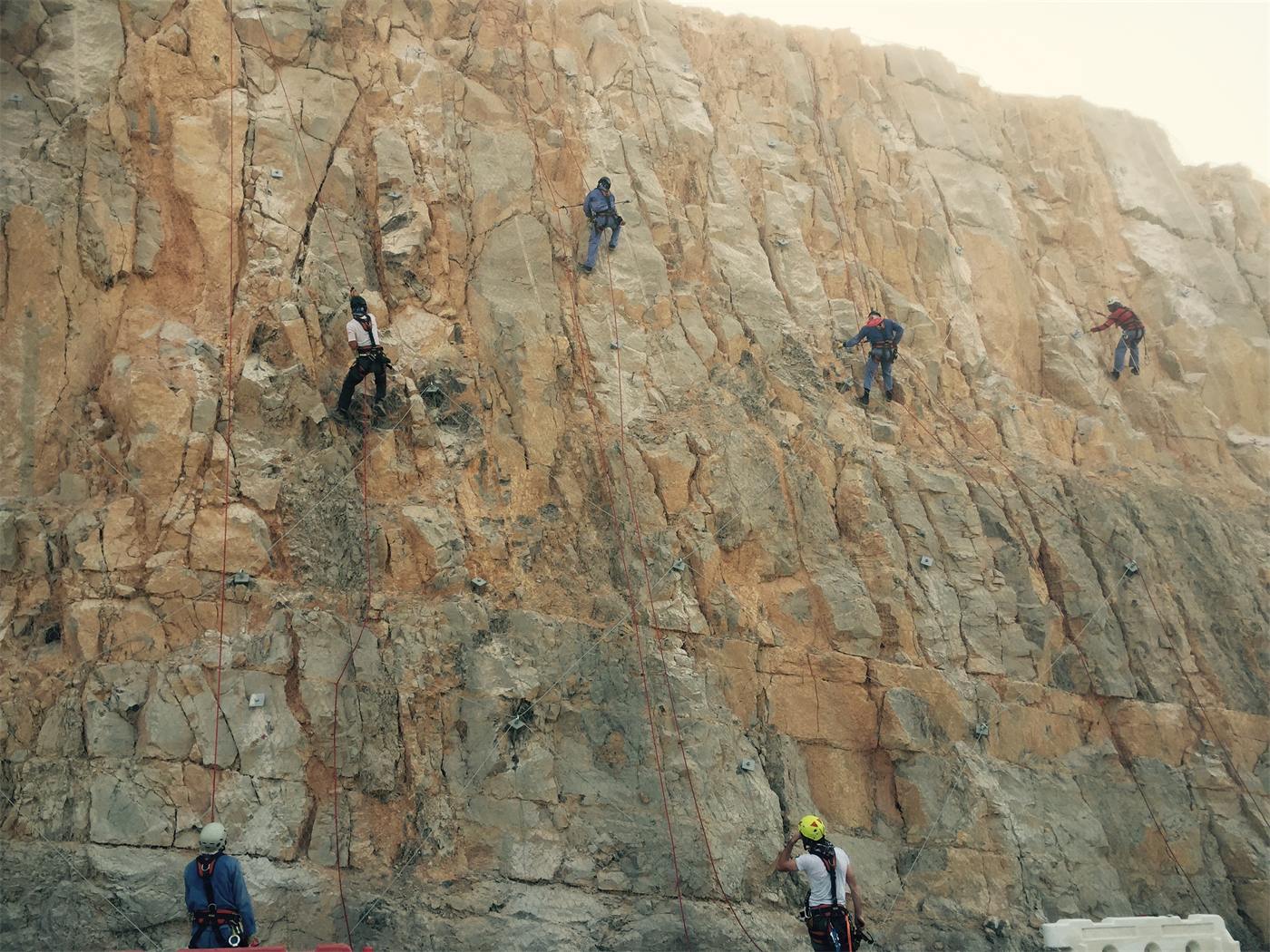
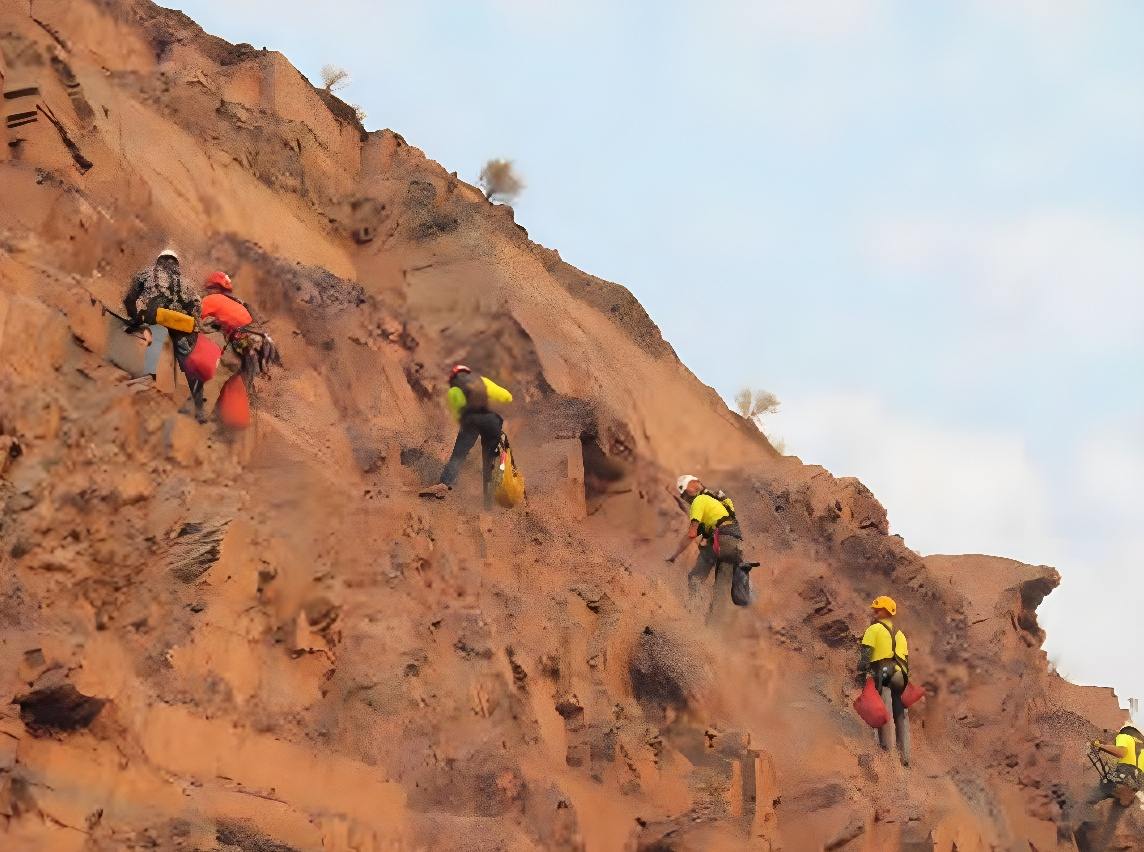
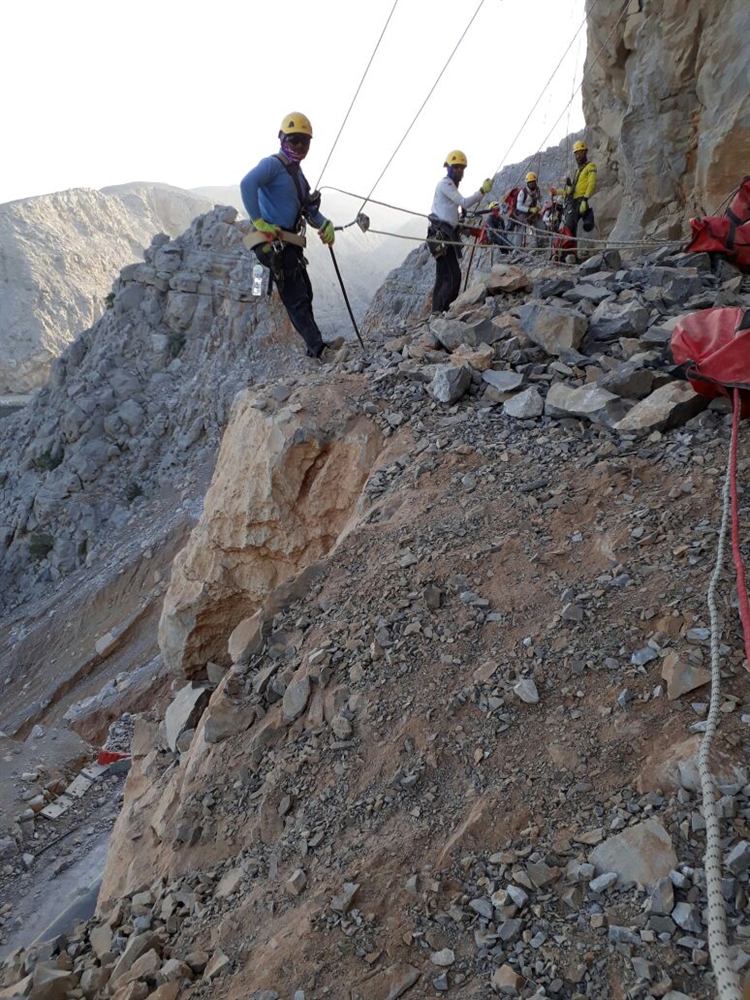
Before any protection system goes in, the standing hazard must come off. Our certified rope-access technicians descend the face and bring loose blocks and weathered rock down in a controlled way — with pry bars, airbags and precision breaking tools.
Traffic and the zone below the face are managed throughout; fallen material is removed and disposed of, and the cleaned face is verified with a final inspection confirming it is ready for installation works.
Scope of works
Face inspection & hazard-block mapping
Rope-access scaling
Block breaking & controlled lowering
Traffic & exclusion-zone management
Debris removal & post-scaling verification
Certified techniciansControlled block removalTraffic-managed works
FIG.01 — Scaling crew on the crestFIG.02 — Multi-rope face worksFIG.03 — Bar scaling, weathered face
Rock is far weaker in tension than in compression — hydraulic splitting exploits exactly that. Holes are drilled to a designed depth and spacing; the splitter then drives a centre wedge between counter-wedges at 400+ tonnes of force, opening a controlled crack from the inside within seconds — no explosives, no impact noise.
With no shock wave, flying debris or heavy vibration, the method is safe millimetres from foundations, in urban and residential zones, inside confined tunnels and even underwater — and the split direction is dictated precisely by wedge orientation, with next to no dust.
400+ t splitting forceZero blast · zero vibrationUrban · tunnel · underwater
FIG.01 — Precision hole drilling for the split patternFIG.02 — Confined urban clearance, beside residences
02 — Capability
One catalogue. every energy class.
Impact energy decides everything. We dimension and supply systems across two full orders of magnitude — matched precisely to the block size, the slope and the trajectory.
100
kJ
1,000
kJ
3,000
kJ
5,000
kJ
8,000
kJ
12,500
kJ
100–1,000 kJ
Light to medium fences
Roadside slopes, low cuttings and protective fencing where rockfall energy is moderate.
1,000–5,000 kJ
High-energy barriers
Major highway and rail corridors through steep, actively eroding terrain.
5,000–12,500 kJ
Extreme & debris-flow
The most demanding catchments — large blocks, long falls and channelized debris.
Extreme capacity
Engineered for the extreme.
From rockfall fences to high-energy debris-flow barriers — systems that hold against the most violent loads the mountains can release.
03 — Why Artusa
Engineering you can stand beneath.
For 25 years Artusa has designed and built slope and rockfall protection where the consequences of failure are measured in lives, not downtime — now bringing that record to the Sultanate of Oman. We deliver the complete safety package — and we don't leave safety to chance.
International design standards. Every system dimensioned to recognized methods and verified for its design energy.
Independently tested components. Certified, TÜV-tested hardware — traceable from factory to slope.
One accountable team. Survey, design, supply, installation and monitoring — no hand-offs, no gaps in responsibility.
ISO 9001ISO 14001ISO 45001ISO 10002TÜV-testedEN-compliant design
25yrs
Protection engineering now serving Oman
Total access
Where access ends, we begin.
Trained, certified rope-access teams install protection on Oman's steepest, most exposed and most demanding terrain.
04 — How we work
From survey to safety.
A single accountable team carries every project from the first site visit to long-term monitoring — turnkey, and answerable for the result.
01
Assess
Site survey, geotechnical mapping and rockfall trajectory analysis to quantify the real hazard.
02
Engineer
System selection and dimensioning to international standards, verified for the design energy.
03
Supply
Certified, TÜV-tested components delivered to site, complete and traceable.
04
Install
Trained crews build to specification in difficult, high-exposure mountain terrain.
05
Monitor
Optional smart early-warning keeps watch on the slope long after handover.
05 — Where we protect
Built for Oman's terrain.
From the Hajar range to coastal cuttings and desert quarries — wherever rock, slope or flow threatens people and assets.
Highways & Roads
Railways
Mining & Quarries
Dams & Hydro
Urban Slopes
Tourism & Heritage
Where we work in Oman — the terrain, what fails, which systems fit
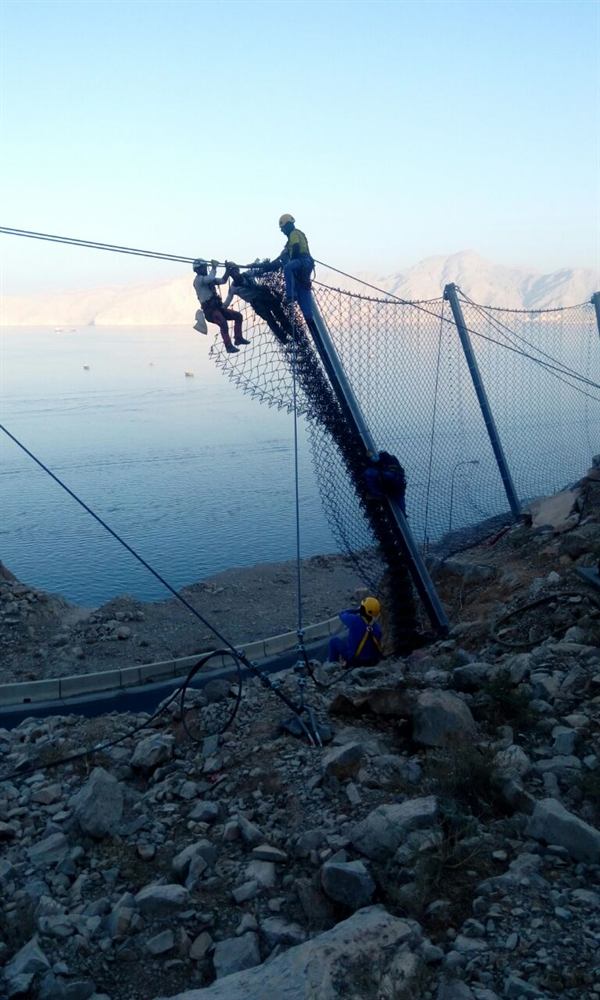
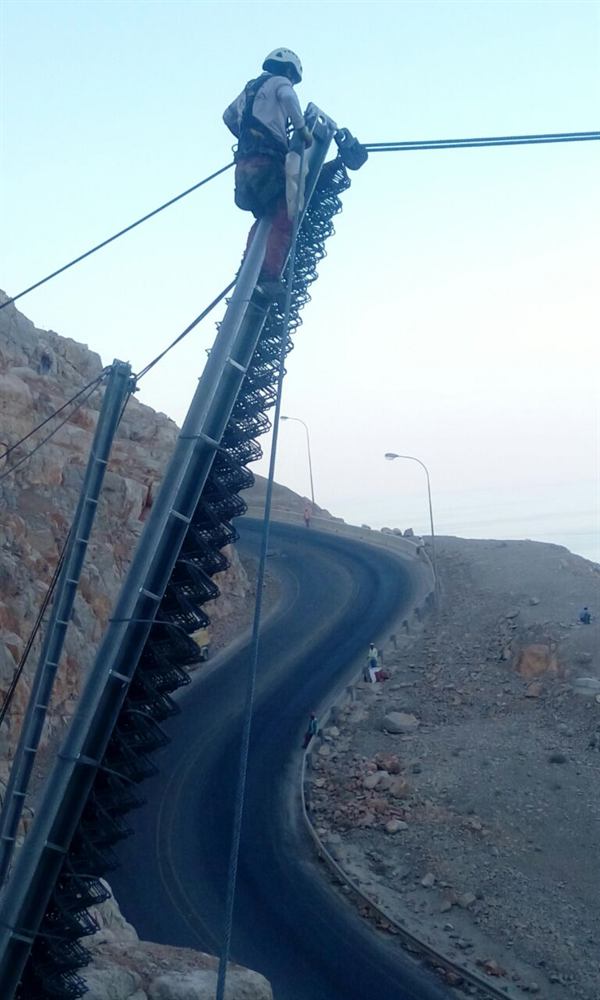
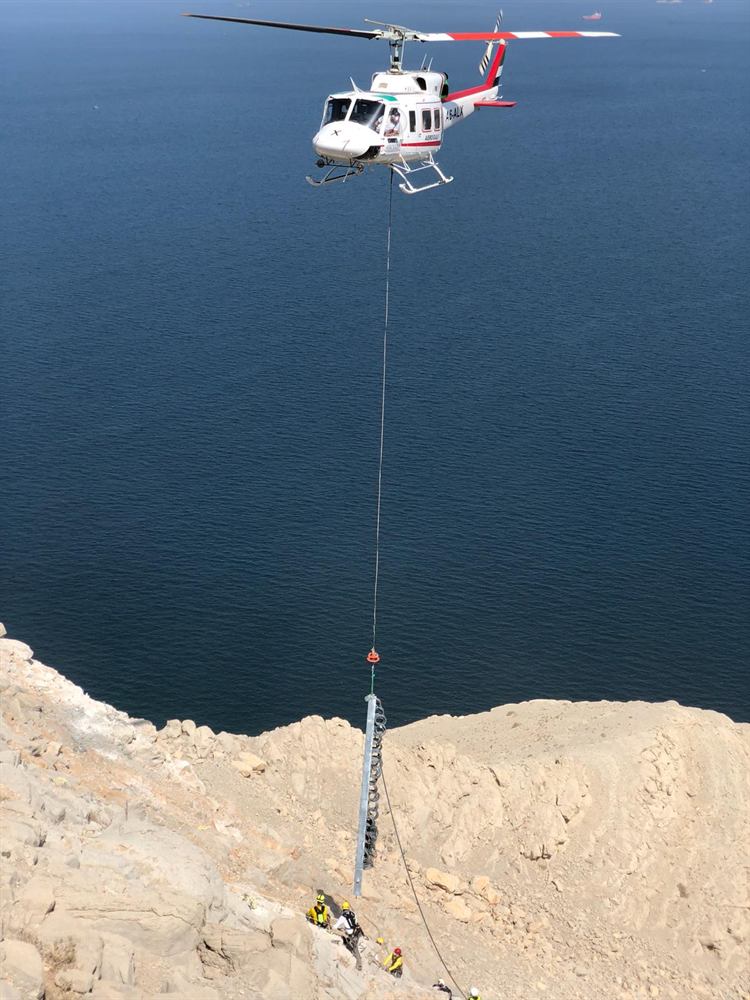
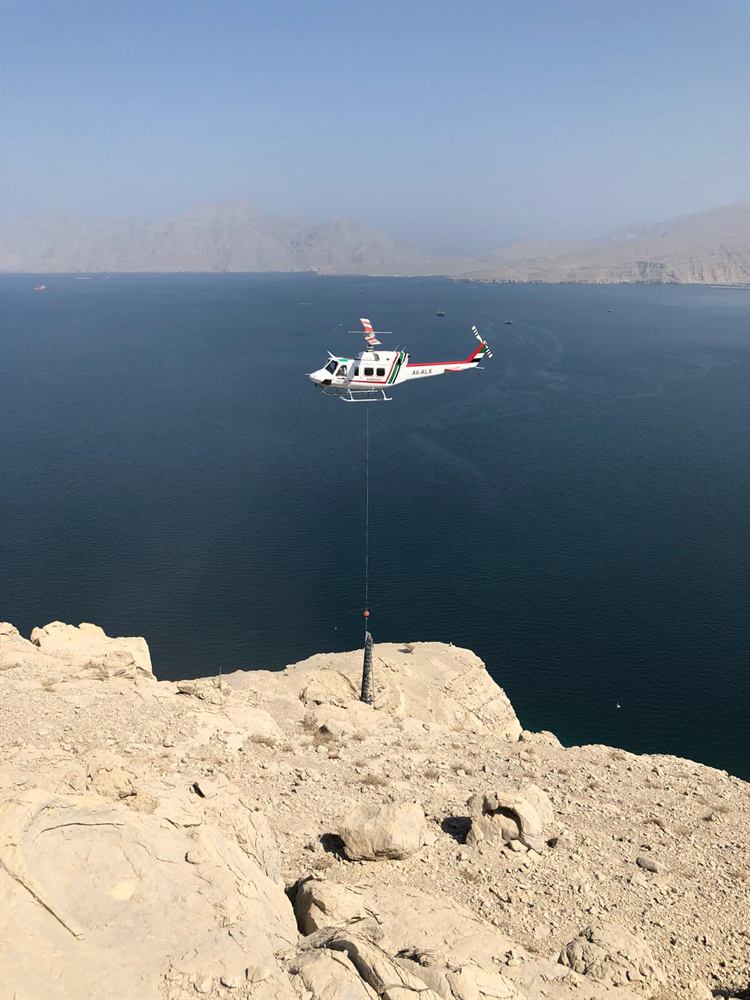
Real Artusa installations — barriers, mesh, shotcrete and bridges across the mountains and coastlines of Oman. Project record: Khasab–Tibat coastal road, Musandam →
Clifftop fenceBarrier installationCoastal corridorDrilling & anchoringAerial logisticsRope-access crewOn the ridgeClifftop barrierMountain barrierHeli transportClifftop fenceBarrier installationCoastal corridorDrilling & anchoringAerial logisticsRope-access crewOn the ridgeClifftop barrierMountain barrierHeli transport
07 — Questions
What clients ask first.
Straight answers on energy classes, scope, coverage and how a project starts — before the first call. For the deeper technical questions — specifications, energy classes, inspection — see the engineering answers.
What impact energies can your rockfall barriers absorb?
Systems are dimensioned and supplied from 100 kJ to 12,500 kJ. Light-to-medium fences (100–1,000 kJ) cover roadside slopes and low cuttings; high-energy barriers (1,000–5,000 kJ) protect major highway and rail corridors; the 5,000–12,500 kJ class is for the most demanding catchments — large blocks, long falls and channelized debris flows. Every system is matched to block size, slope and trajectory and verified for its design energy.
Which services does Artusa Oman provide?
Ten solution families: rockfall protection barriers, trail and suspension footbridges, slope and embankment stabilization, shotcrete and surface sealing, debris-flow and landslide control, mining and quarry protection, hydroseeding and revegetation, early-warning and monitoring, rock and slope scaling, and hydraulic rock splitting — delivered by one accountable team from survey and design through supply, installation and monitoring.
Where in Oman do you work?
We are based in Falaj Al Qabail, Sohar, and deliver across the Sultanate — from the Hajar range to coastal cuttings, desert quarries and urban slopes — as well as the wider GCC.
How does a project start?
Share the site location with us. We survey the slope, map the geology and run rockfall trajectory analysis to quantify the real hazard, then recommend a system and return a costed proposal — engineering-led and without obligation. We reply within two business days (Sunday–Thursday).
Are your systems and processes certified?
Systems are dimensioned to international standards and verified for their design energy; components are certified, TÜV-tested and traceable from factory to slope. Artusa's management systems are certified to ISO 9001, ISO 14001, ISO 45001 and ISO 10002.
Can you install on steep or hard-to-reach terrain?
Yes. Trained, certified rope-access crews install protection on Oman's steepest and most exposed faces, and our own scaling teams remove loose rock before any system goes in.
Who is behind Artusa Oman?
Artusa Oman is Artusa Insaat Ic ve Dis Ticaret LLC (C.R. No. 1262640), the Omani company of Artusa — a slope and rockfall protection contractor headquartered in İvedik OSB, Ankara, Türkiye, with 25 years of design and construction experience.
How can I reach you, and in which languages?
By phone or WhatsApp on +968 9322 0181, by e-mail at oman@artusaoman.com, or through the form below. We work in English and Arabic, Sunday to Thursday, 08:00–17:00 Gulf Standard Time.
Share the site and we will assess the hazard, recommend a system and return a costed proposal. Engineering-led, no obligation. Based in Sohar — delivering across Oman and the wider GCC.
Oman office
Artusa Insaat Ic ve Dis Ticaret LLC Falaj Al Qabail, Sohar · Sultanate of Oman C.R. No. 1262640 Open in Maps ↗